
Warum wir über die Reruptur des Kreuzbandes sprechen müssen
Eine zweite Verletzung ist mehr als ein medizinisches Ereignis
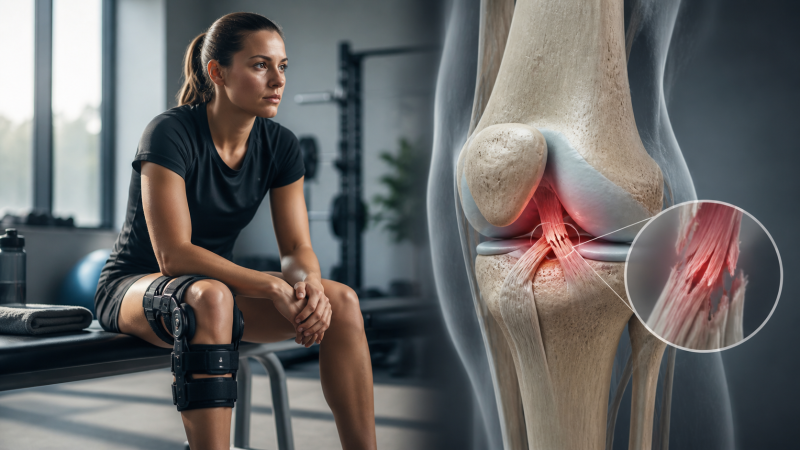
Eine erneute Kreuzbandverletzung gehört zu den frustrierendsten und einschneidendsten Erfahrungen für Athlet. Monate harter Arbeit, Hoffnung und Geduld können innerhalb eines Augenblicks zunichte sein. Manche beenden danach sogar ihre sportliche Karriere. Für Ärzt, Physiotherapeut und Trainer bedeutet das: Es geht nicht nur um ein verletztes Knie, sondern um eine Person, deren sportliche und oft berufliche Perspektive betroffen ist.
Das unterschätzte Risiko nach der Operation
Die Zahlen machen deutlich, wie relevant das Thema ist: Rund jede fünfte Patient erleidet nach einer VKB-Rekonstruktion innerhalb weniger Jahre eine zweite VKB-Verletzung. Bei jungen, hochaktiven Sportler in Richtungswechsel-Sportarten können die Raten 25–30 Prozent erreichen. Etwa die Hälfte der zweiten Verletzungen betrifft sogar das andere Knie. Eine Operation beseitigt das Risiko also keineswegs automatisch.
Besonders gefährdet sind junge Athlet. Unter 25 Jahren steigt das Risiko deutlich, bei unter 18-Jährigen werden innerhalb von zwei Jahren nach der Operation Wiederverletzungsraten von 20–30 Prozent berichtet. Ein signifikanter Unterschied zwischen Männern und Frauen beim Gesamtrisiko einer zweiten Verletzung zeigt sich dagegen nicht eindeutig. Entscheidend sind vielmehr Alter, Sportart, Aktivitätsniveau und Reha-Qualität.
Return-to-Sport ist nicht gleich Rückkehr zur Leistung
Ein zentraler Punkt ist der Zeitpunkt der Rückkehr. Eine Rückkehr vor neun Monaten ist in Studien mit einem deutlich höheren Risiko verbunden. Gleichzeitig reicht Zeit allein nicht aus. Entscheidend sind funktionelle Kriterien wie Kraftsymmetrie, Hop-Tests, Bewegungsanalyse und neurokognitive Fähigkeiten. Eine Reha von mindestens 9–12 Monaten schafft die Grundlage, ersetzt aber keine objektive Prüfung.
Und selbst wenn ein Athlet wieder spielen darf, bedeutet das noch lange nicht, wieder auf dem früheren Leistungsniveau zu sein. Nur etwa 55–65 Prozent erreichen nach einer VKB-Rekonstruktion ihr altes Niveau. Die vollständige Performance kann bis zu 18–24 Monate benötigen. Deshalb muss die Performance-Phase Teil der Rehabilitation sein.
Das Risiko entsteht nicht nur im Knie
Rerupturen sind das Ergebnis eines komplexen Zusammenspiels. Biomechanische Faktoren wie instabile Landungen, Kraftasymmetrien oder mangelnde Hüft- und Rumpfkontrolle können eine Rolle spielen. Gleichzeitig wird die Bedeutung von Bewegungsvariabilität, motorischem Lernen und neurokognitiven Fähigkeiten zunehmend deutlich. Reaktionszeit, Aufmerksamkeit und Entscheidungen unter Zeitdruck können in entscheidenden Spielsituationen beeinflussen, wie sicher das Knie belastet wird.
Auch psychologische Faktoren sind relevant: Angst vor einer erneuten Verletzung kann die Rückkehr zum Sport verhindern und möglicherweise Bewegungsmuster verändern. Umgekehrt kann übermäßiges Vertrauen zu einer zu frühen Belastung führen.
Operation, Anatomie und Lebensstil
Transplantatwahl, Graftdicke, Tunnelplatzierung und zusätzliche Stabilisierungsverfahren beeinflussen das Risiko. Ebenso können anatomische Faktoren wie eine steile hintere Tibiainklination, eine schmale Notch oder Gelenklaxität das individuelle Risikoprofil verändern.
Doch damit endet die Liste nicht: Schlafmangel, Stress, mentale Ermüdung, Trainingsbelastung, Motivation, Adhärenz, Untergrund, Schuhwerk und Trainingsorganisation gehören ebenfalls zum Gesamtbild.
Prävention beginnt nach der Freigabe erst richtig
Die entscheidende Erkenntnis lautet: Prävention ist kein Projekt, sondern ein langfristiger Prozess. Neuromuskuläres Training, Kraft, Koordination, Technik, Reaktionsfähigkeit und sportartspezifische Belastung müssen auch nach der Freigabe weiterentwickelt werden.
Doch welche dieser Faktoren sind tatsächlich veränderbar – und welche Kombination entscheidet darüber, ob ein Athlet sicher zurückkehrt oder erneut verletzt wird? Genau hier beginnt die entscheidende Frage für die Praxis: Wie lässt sich aus all diesen Risikofaktoren ein individuelles Präventionskonzept entwickeln?
Dein DK Sports & Physio Team aus der Karlsruher Oststadt
Den ausführlichen Artikel findest du in unserer DK Academy.
Wir geben Physiotherapeuten, Trainern und allen Wissbegierigen einen sachlichen Einblick in die Physiotherapie und helfen so die Rehabilitation und das Training nach Verletzungen oder Beschwerden effizienter zu gestalten.
Sichere dir vollen Zugriff auf unsere Rehab Live Sessions, exklusive Review- und Blogartikel, Simple Tipps und Infografiken.

Du benötigst Physiotherapie im Raum Karlsruhe? Dann sind wir gerne für dich da und unterstützen dich!
Dein DK Sports & Physio Team aus der Karlsruher Oststadt
Unsere weiteren Blog-Artikel

Training als Medikament bei Multipler Sklerose?

Vegane Ernährung im Leistungssport – zwischen Planung, Evidenz und Performance
MTSS oder LIMP? Warum wir das „Schienbeinkantensyndrom“ neu denken müssen

Glutenunverträglichkeit – alles nur Kopfsache?

Airex-Kissen & Bosu-Bälle – Spielzeug oder kann das weg?
Warum wir über die Reruptur des Kreuzbandes sprechen müssen

Arroganz in der Physiotherapie? Zwischen Wissen und Gewissheit
Quellenangaben:
[1] S. S. Jameson, D. Dowen, P. James, I. Serrano-Pedraza, M. R. Reed, und D. Deehan, „Complications following anterior cruciate ligament reconstruction in the English NHS“, The Knee, Bd. 19, Nr. 1, S. 14–19, Jan. 2012, doi: 10.1016/j.knee.2010.11.011.
[2] K. W. Janssen, J. W. Orchard, T. R. Driscoll, und W. Van Mechelen, „High incidence and costs for anterior cruciate ligament reconstructions performed in Australia from 2003–2004 to 2007–2008: time for an anterior cruciate ligament register by Scandinavian model?“, Scand. J. Med. Sci. Sports, Bd. 22, Nr. 4, S. 495–501, Aug. 2012, doi: 10.1111/j.1600-0838.2010.01253.x.
[3] S. M. Gianotti, S. W. Marshall, P. A. Hume, und L. Bunt, „Incidence of anterior cruciate ligament injury and other knee ligament injuries: A national population-based study“, J. Sci. Med. Sport, Bd. 12, Nr. 6, S. 622–627, Nov. 2009, doi: 10.1016/j.jsams.2008.07.005.
[4] T. L. Sanders u. a., „Incidence of Anterior Cruciate Ligament Tears and Reconstruction: A 21-Year Population-Based Study“, Am. J. Sports Med., Bd. 44, Nr. 6, S. 1502–1507, Juni 2016, doi: 10.1177/0363546516629944.
[5] A. J. Wiggins, R. K. Grandhi, D. K. Schneider, D. Stanfield, K. E. Webster, und G. D. Myer, „Risk of Secondary Injury in Younger Athletes After Anterior Cruciate Ligament Reconstruction: A Systematic Review and Meta-analysis“, Am. J. Sports Med., Bd. 44, Nr. 7, S. 1861–1876, Juli 2016, doi: 10.1177/0363546515621554.
[6] R. Piussi u. a., „Better Safe Than Sorry? A Systematic Review with Meta-analysis on Time to Return to Sport After ACL Reconstruction as a Risk Factor for Second ACL Injury“, J. Orthop. Sports Phys. Ther., Bd. 54, Nr. 3, S. 161–175, März 2024, doi: 10.2519/jospt.2023.11977.
[7] N. J. Romanchuk, H. Livock, K. J. Lukas, M. J. Del Bel, D. L. Benoit, und S. Carsen, „Protocol for the systematic review of return-to-activity criteria in adolescent patients following an anterior cruciate ligament reconstruction“, Syst. Rev., Bd. 11, Nr. 1, S. 93, Dez. 2022, doi: 10.1186/s13643-022-01965-w.
[8] A. D. Patel, G. S. Bullock, J. Wrigley, M. V. Paterno, T. C. Sell, und J. M. Losciale, „Does sex affect second ACL injury risk? A systematic review with meta-analysis“, Br. J. Sports Med., Bd. 55, Nr. 15, S. 873–882, Aug. 2021, doi: 10.1136/bjsports-2020-103408.
[9] G. D. Myer, M. V. Paterno, K. R. Ford, C. E. Quatman, und T. E. Hewett, „Rehabilitation After Anterior Cruciate Ligament Reconstruction: Criteria-Based Progression Through the Return-to-Sport Phase“, J. Orthop. Sports Phys. Ther., Bd. 36, Nr. 6, S. 385–402, Juni 2006, doi: 10.2519/jospt.2006.2222.
[10] K. E. Webster und T. E. Hewett, „What is the Evidence for and Validity of Return-to-Sport Testing after Anterior Cruciate Ligament Reconstruction Surgery? A Systematic Review and Meta-Analysis“, Sports Med. Auckl. NZ, Bd. 49, Nr. 6, S. 917–929, Juni 2019, doi: 10.1007/s40279-019-01093-x.
[11] D. Zhao u. a., „Risk Factors for Revision or Rerupture After Anterior Cruciate Ligament Reconstruction: A Systematic Review and Meta-analysis“, Am. J. Sports Med., Bd. 51, Nr. 11, S. 3053–3075, Sep. 2023, doi: 10.1177/03635465221119787.
[12] M. V. Paterno, M. J. Rauh, L. C. Schmitt, K. R. Ford, und T. E. Hewett, „Incidence of Second ACL Injuries 2 Years After Primary ACL Reconstruction and Return to Sport“, Am. J. Sports Med., Bd. 42, Nr. 7, S. 1567–1573, Juli 2014, doi: 10.1177/0363546514530088.
[13] K. D. Shelbourne, T. Gray, und M. Haro, „Incidence of Subsequent Injury to Either Knee within 5 Years after Anterior Cruciate Ligament Reconstruction with Patellar Tendon Autograft“, Am. J. Sports Med., Bd. 37, Nr. 2, S. 246–251, Feb. 2009, doi: 10.1177/0363546508325665.
[14] D. C. Astur, C. M. Cachoeira, T. Da Silva Vieira, P. Debieux, C. C. Kaleka, und M. Cohen, „Increased incidence of anterior cruciate ligament revision surgery in paediatric verses adult population“, Knee Surg. Sports Traumatol. Arthrosc., Bd. 26, Nr. 5, S. 1362–1366, Mai 2018, doi: 10.1007/s00167-017-4727-z.
[15] B. Cancino, C. Muñoz, M. J. Tuca, E. A. M. Birrer, und M. F. Sepúlveda, „Anterior Cruciate Ligament Rupture in Skeletally Immature Patients“, JAAOS Glob. Res. Rev., Bd. 6, Nr. 5, Mai 2022, doi: 10.5435/JAAOSGlobal-D-21-00166.
[16] F. Della Villa, M. Hägglund, S. Della Villa, J. Ekstrand, und M. Waldén, „High rate of second ACL injury following ACL reconstruction in male professional footballers: an updated longitudinal analysis from 118 players in the UEFA Elite Club Injury Study“, Br. J. Sports Med., Bd. 55, Nr. 23, S. 1350–1357, Dez. 2021, doi: 10.1136/bjsports-2020-103555.
[17] T. Snaebjörnsson u. a., „Adolescents and female patients are at increased risk for contralateral anterior cruciate ligament reconstruction: a cohort study from the Swedish National Knee Ligament Register based on 17,682 patients“, Knee Surg. Sports Traumatol. Arthrosc., Bd. 25, Nr. 12, S. 3938–3944, Dez. 2017, doi: 10.1007/s00167-017-4517-7.
[18] M. Tátrai u. a., „Higher revision and secondary surgery rates after ACL reconstruction in athletes under 16 compared to those over 16: a case-control study“, J. Orthop. Surg., Bd. 20, Nr. 1, S. 597, Juni 2025, doi: 10.1186/s13018-025-05935-5.
[19] S. Beischer u. a., „Young Athletes Who Return to Sport Before 9 Months After Anterior Cruciate Ligament Reconstruction Have a Rate of New Injury 7 Times That of Those Who Delay Return“, J. Orthop. Sports Phys. Ther., Bd. 50, Nr. 2, S. 83–90, Feb. 2020, doi: 10.2519/jospt.2020.9071.
[20] H. Grindem, L. Snyder-Mackler, H. Moksnes, L. Engebretsen, und M. A. Risberg, „Simple decision rules can reduce reinjury risk by 84% after ACL reconstruction: the Delaware-Oslo ACL cohort study“, Br. J. Sports Med., Bd. 50, Nr. 13, S. 804–808, Juli 2016, doi: 10.1136/bjsports-2016-096031.
[21] A. Cronström, E. Tengman, und C. K. Häger, „Return to Sports: A Risky Business? A Systematic Review with Meta-Analysis of Risk Factors for Graft Rupture Following ACL Reconstruction“, Sports Med., Bd. 53, Nr. 1, S. 91–110, Jan. 2023, doi: 10.1007/s40279-022-01747-3.
[22] R. Kotsifaki, E. King, R. Bahr, und R. Whiteley, „Is 9 months the sweet spot for male athletes to return to sport after anterior cruciate ligament reconstruction?“, Br. J. Sports Med., Bd. 59, Nr. 9, S. 667–675, Mai 2025, doi: 10.1136/bjsports-2024-108733.
[23] P. Kyritsis, R. Bahr, P. Landreau, R. Miladi, und E. Witvrouw, „Likelihood of ACL graft rupture: not meeting six clinical discharge criteria before return to sport is associated with a four times greater risk of rupture“, Br. J. Sports Med., Bd. 50, Nr. 15, S. 946–951, Aug. 2016, doi: 10.1136/bjsports-2015-095908.
[24] M. V. Paterno, B. Huang, S. Thomas, T. E. Hewett, und L. C. Schmitt, „Clinical Factors That Predict a Second ACL Injury After ACL Reconstruction and Return to Sport: Preliminary Development of a Clinical Decision Algorithm“, Orthop. J. Sports Med., Bd. 5, Nr. 12, S. 2325967117745279, Dez. 2017, doi: 10.1177/2325967117745279.
[25] R. Simonson u. a., „Effect of Quadriceps and Hamstring Strength Relative to Body Weight on Risk of a Second ACL Injury: A Cohort Study of 835 Patients Who Returned to Sport After ACL Reconstruction“, Orthop. J. Sports Med., Bd. 11, Nr. 4, S. 232596712311573, Apr. 2023, doi: 10.1177/23259671231157386.
[26] S. G. Bodkin u. a., „Predicting Anterior Cruciate Ligament Reinjury From Return-to-Activity Assessments at 6 Months Postsurgery: A Prospective Cohort Study“, J. Athl. Train., Bd. 57, Nr. 4, S. 325–333, Apr. 2022, doi: 10.4085/1062-6050-0407.20.
[27] J. Högberg u. a., „No Association Between Hamstrings-to-Quadriceps Strength Ratio and Second ACL Injuries After Accounting for Prognostic Factors: A Cohort Study of 574 Patients After ACL-Reconstruction“, Sports Med. – Open, Bd. 10, Nr. 1, S. 7, Jan. 2024, doi: 10.1186/s40798-023-00670-9.
[28] D. Piskin, A. Benjaminse, P. Dimitrakis, und A. Gokeler, „Neurocognitive and Neurophysiological Functions Related to ACL Injury: A Framework for Neurocognitive Approaches in Rehabilitation and Return-to-Sports Tests“, Sports Health Multidiscip. Approach, Bd. 14, Nr. 4, S. 549–555, Juli 2022, doi: 10.1177/19417381211029265.
[29] J. M. Losciale, R. M. Zdeb, L. Ledbetter, M. P. Reiman, und T. C. Sell, „The Association Between Passing Return-to-Sport Criteria and Second Anterior Cruciate Ligament Injury Risk: A Systematic Review With Meta-analysis“, J. Orthop. Sports Phys. Ther., Bd. 49, Nr. 2, S. 43–54, Feb. 2019, doi: 10.2519/jospt.2019.8190.
[30] E. T. Hurley u. a., „Return to play testing following anterior cruciate reconstruction – A systematic review & meta-analysis“, The Knee, Bd. 34, S. 134–140, Jan. 2022, doi: 10.1016/j.knee.2021.11.010.
[31] E. Y. K. Ashigbi, W. Banzer, und D. Niederer, „Return to Sport Tests’ Prognostic Value for Reinjury Risk after Anterior Cruciate Ligament Reconstruction: A Systematic Review“, Med. Sci. Sports Exerc., Bd. 52, Nr. 6, S. 1263–1271, Juni 2020, doi: 10.1249/MSS.0000000000002246.
[32] M. V. Paterno, „Incidence and Predictors of Second Anterior Cruciate Ligament Injury After Primary Reconstruction and Return to Sport“, J. Athl. Train., Bd. 50, Nr. 10, S. 1097–1099, Okt. 2015, doi: 10.4085/1062-6050-50.10.07.
[33] M. Leppänen u. a., „Stiff Landings Are Associated With Increased ACL Injury Risk in Young Female Basketball and Floorball Players“, Am. J. Sports Med., Bd. 45, Nr. 2, S. 386–393, Feb. 2017, doi: 10.1177/0363546516665810.
[34] M. V. Paterno u. a., „Biomechanical Measures during Landing and Postural Stability Predict Second Anterior Cruciate Ligament Injury after Anterior Cruciate Ligament Reconstruction and Return to Sport“, Am. J. Sports Med., Bd. 38, Nr. 10, S. 1968–1978, Okt. 2010, doi: 10.1177/0363546510376053.
[35] C. “Buz” Swanik, „Brains and Sprains: The Brain’s Role in Noncontact Anterior Cruciate Ligament Injuries“, J. Athl. Train., Bd. 50, Nr. 10, S. 1100–1102, Okt. 2015, doi: 10.4085/1062-6050-50.10.08.
[36] D. C. Herman und J. T. Barth, „Drop-Jump Landing Varies With Baseline Neurocognition: Implications for Anterior Cruciate Ligament Injury Risk and Prevention“, Am. J. Sports Med., Bd. 44, Nr. 9, S. 2347–2353, Sep. 2016, doi: 10.1177/0363546516657338.
[37] E. Reiche u. a., „Lower Extremity Reaction Time in Individuals With Contact Versus Noncontact Anterior Cruciate Ligament Injuries After Reconstruction“, J. Athl. Train., Bd. 59, Nr. 1, S. 66–72, Jan. 2024, doi: 10.4085/1062-6050-0428.22.
[38] J. M. Avedesian, „Think fast, stay healthy? A narrative review of neurocognitive performance and lower extremity injury“, Musculoskelet. Sci. Pract., Bd. 74, S. 103186, Nov. 2024, doi: 10.1016/j.msksp.2024.103186.
[39] D. R. Grooms, M. Chaput, J. E. Simon, C. R. Criss, G. D. Myer, und J. A. Diekfuss, „Combining Neurocognitive and Functional Tests to Improve Return-to-Sport Decisions Following ACL Reconstruction“, J. Orthop. Sports Phys. Ther., Bd. 53, Nr. 8, S. 415–419, Aug. 2023, doi: 10.2519/jospt.2023.11489.
[40] C. L. Ardern, N. F. Taylor, J. A. Feller, und K. E. Webster, „A systematic review of the psychological factors associated with returning to sport following injury“, Br. J. Sports Med., Bd. 47, Nr. 17, S. 1120–1126, Nov. 2013, doi: 10.1136/bjsports-2012-091203.
[41] B. U. Nwachukwu u. a., „How Much Do Psychological Factors Affect Lack of Return to Play After Anterior Cruciate Ligament Reconstruction? A Systematic Review“, Orthop. J. Sports Med., Bd. 7, Nr. 5, S. 232596711984531, Mai 2019, doi: 10.1177/2325967119845313.
[42] K. Yensen u. a., „Subjective Causes for Failure to Return to Sport After Anterior Cruciate Ligament Reconstruction: A Systematic Review and Meta-analysis“, Sports Health Multidiscip. Approach, Bd. 17, Nr. 2, S. 243–251, März 2025, doi: 10.1177/19417381241231631.
[43] A. Gokeler, B. Dingenen, und T. E. Hewett, „Rehabilitation and Return to Sport Testing After Anterior Cruciate Ligament Reconstruction: Where Are We in 2022?“, Arthrosc. Sports Med. Rehabil., Bd. 4, Nr. 1, S. e77–e82, Jan. 2022, doi: 10.1016/j.asmr.2021.10.025.
[44] T. C. Sell u. a., „Anterior Cruciate Ligament Return to Sport after Injury Scale (ACL-RSI) Scores over Time After Anterior Cruciate Ligament Reconstruction: A Systematic Review with Meta-analysis“, Sports Med. – Open, Bd. 10, Nr. 1, S. 49, Apr. 2024, doi: 10.1186/s40798-024-00712-w.
[45] K. E. Webster, J. A. Feller, und C. Lambros, „Development and preliminary validation of a scale to measure the psychological impact of returning to sport following anterior cruciate ligament reconstruction surgery“, Phys. Ther. Sport Off. J. Assoc. Chart. Physiother. Sports Med., Bd. 9, Nr. 1, S. 9–15, Feb. 2008, doi: 10.1016/j.ptsp.2007.09.003.
[46] K. E. Webster und J. A. Feller, „Development and Validation of a Short Version of the Anterior Cruciate Ligament Return to Sport After Injury (ACL-RSI) Scale“, Orthop. J. Sports Med., Bd. 6, Nr. 4, S. 232596711876376, Apr. 2018, doi: 10.1177/2325967118763763.
[47] R. Zarzycki, E. Arhos, M. Failla, J. Capin, A. H. Smith, und L. Snyder-Mackler, „Association of the Psychological Response to the ACL-SPORTS Training Program and Self-reported Function at 2 Years After Anterior Cruciate Ligament Reconstruction“, Am. J. Sports Med., Bd. 49, Nr. 13, S. 3495–3501, Nov. 2021, doi: 10.1177/03635465211045388.
[48] A. L. McPherson, J. A. Feller, T. E. Hewett, und K. E. Webster, „Psychological Readiness to Return to Sport Is Associated With Second Anterior Cruciate Ligament Injuries“, Am. J. Sports Med., Bd. 47, Nr. 4, S. 857–862, März 2019, doi: 10.1177/0363546518825258.
[49] R. Zarzycki u. a., „Female Athletes With Better Psychological Readiness Are at Higher Risk for Second ACL Injury After Primary ACL Reconstruction“, Sports Health Multidiscip. Approach, Bd. 16, Nr. 1, S. 149–154, Jan. 2024, doi: 10.1177/19417381231155120.
[50] A. J. Slagers, I. Van Den Akker-Scheek, J. H. B. Geertzen, J. Zwerver, und I. H. F. Reininga, „Responsiveness of the anterior cruciate ligament – Return to Sports after Injury (ACL-RSI) and Injury – Psychological Readiness to Return to Sport (I-PRRS) scales“, J. Sports Sci., Bd. 37, Nr. 21, S. 2499–2505, Nov. 2019, doi: 10.1080/02640414.2019.1646023.
[51] A. G. H. Faleide u. a., „Anterior cruciate ligament—return to sport after injury scale: validation of the Norwegian language version“, Knee Surg. Sports Traumatol. Arthrosc., Bd. 28, Nr. 8, S. 2634–2643, Aug. 2020, doi: 10.1007/s00167-020-05901-0.
[52] M. V. Paterno, K. Flynn, S. Thomas, und L. C. Schmitt, „Self-Reported Fear Predicts Functional Performance and Second ACL Injury After ACL Reconstruction and Return to Sport: A Pilot Study“, Sports Health Multidiscip. Approach, Bd. 10, Nr. 3, S. 228–233, Mai 2018, doi: 10.1177/1941738117745806.
[53] G. K. Berger, Z. A. Rockov, C. Byrne, N. E. Trentacosta, und M. A. Stone, „The role of relaxin in anterior cruciate ligament injuries: a systematic review“, Eur. J. Orthop. Surg. Traumatol., Bd. 33, Nr. 8, S. 3319–3326, Juni 2023, doi: 10.1007/s00590-023-03618-7.
[54] S. A. Fry u. a., „Use of Hormonal Contraceptives Is Associated With Decreased Incidence of Anterior Cruciate Ligament Injuries Requiring Reconstruction in Female Patients“, Arthrosc. J. Arthrosc. Relat. Surg., Feb. 2025, doi: 10.1016/j.arthro.2025.02.012.
[55] L. White u. a., „Combined hormonal contraceptive use is not protective against musculoskeletal conditions or injuries: a systematic review with data from 5 million females“, Br. J. Sports Med., Bd. 57, Nr. 18, S. 1195–1202, Sep. 2023, doi: 10.1136/bjsports-2022-106519.
[56] J. Moriceau, A. Fevre, D. Domínguez-Balmaseda, Á. González-de-la-Flor, J. Simón-Areces, und G. García-Pérez-de-Sevilla, „The Influence of the Menstrual Cycle and Oral Contraceptives on Knee Laxity or Anterior Cruciate Ligament Injury Risk: A Systematic Review“, Appl. Sci., Bd. 12, Nr. 24, S. 12627, Dez. 2022, doi: 10.3390/app122412627.
[57] A. Bulbul, E. Ari, N. Apaydin, und G. Ipekoglu, „The Impact of Genetic Polymorphisms on Anterior Cruciate Ligament Injuries in Athletes: A Meta-Analytical Approach“, Biology, Bd. 12, Nr. 12, S. 1526, Dez. 2023, doi: 10.3390/biology12121526.
[58] K. Lorenz, A. Mastalerz, A. Cywińska, A. Garbacz, und E. Maculewicz, „Polymorphism of Genes Encoding Inflammatory Interleukins and the Risk of Anterior Cruciate Ligament Injury: A Systematic Review and Meta-Analysis“, Int. J. Mol. Sci., Bd. 25, Nr. 9, S. 4976, Mai 2024, doi: 10.3390/ijms25094976.
[59] K. O’Connell u. a., „Interactions between collagen gene variants and risk of anterior cruciate ligament rupture“, Eur. J. Sport Sci., Bd. 15, Nr. 4, S. 341–350, Juni 2015, doi: 10.1080/17461391.2014.936324.
[60] Z. Sun, P. Cięszczyk, K. Humińska-Lisowska, M. Michalowska-Sawczyn, und S. Yue, „Genetic Determinants of the Anterior Cruciate Ligament Rupturein Sport: An Up-to-Date Systematic Review“, J. Hum. Kinet., Mai 2023, doi: 10.5114/jhk/163073.
[61] R. D. Bell, S. J. Shultz, L. Wideman, und V. C. Henrich, „Collagen Gene Variants Previously Associated With Anterior Cruciate Ligament Injury Risk Are Also Associated With Joint Laxity“, Sports Health Multidiscip. Approach, Bd. 4, Nr. 4, S. 312–318, Juli 2012, doi: 10.1177/1941738112446684.
[62] E. T. Hurley u. a., „Quadriceps tendon has a lower re-rupture rate than hamstring tendon autograft for anterior cruciate ligament reconstruction – A meta-analysis“, J. ISAKOS, Bd. 7, Nr. 2, S. 87–93, Apr. 2022, doi: 10.1016/j.jisako.2021.10.001.
[63] A. M. J. Getgood u. a., „Lateral Extra-articular Tenodesis Reduces Failure of Hamstring Tendon Autograft Anterior Cruciate Ligament Reconstruction: 2-Year Outcomes From the STABILITY Study Randomized Clinical Trial“, Am. J. Sports Med., Bd. 48, Nr. 2, S. 285–297, Feb. 2020, doi: 10.1177/0363546519896333.
[64] A. Grassi u. a., „A Lateral Extra-articular Procedure Reduces the Failure Rate of Revision Anterior Cruciate Ligament Reconstruction Surgery Without Increasing Complications: A Systematic Review and Meta-analysis“, Am. J. Sports Med., Bd. 52, Nr. 4, S. 1098–1108, März 2024, doi: 10.1177/03635465231173698.
[65] M. Heard u. a., „No increase in adverse events with lateral extra-articular tenodesis augmentation of anterior cruciate ligament reconstruction – Results from the stability randomized trial“, J. ISAKOS, Bd. 8, Nr. 4, S. 246–254, Aug. 2023, doi: 10.1016/j.jisako.2022.12.001.
[66] M. S. Alomari, A. A. Ghaddaf, A. S. Abdulhamid, M. S. Alshehri, M. Ashraf, und H. H. Alharbi, „Single Bundle Versus Double Bundle Anterior Cruciate Ligament Reconstruction: A Systematic Review and Meta-analysis“, Indian J. Orthop., Bd. 56, Nr. 10, S. 1669–1684, Okt. 2022, doi: 10.1007/s43465-022-00718-0.
[67] H. Chen, B. Chen, K. Tie, Z. Fu, und L. Chen, „Single-bundle versus double-bundle autologous anterior cruciate ligament reconstruction: a meta-analysis of randomized controlled trials at 5-year minimum follow-up“, J. Orthop. Surg., Bd. 13, Nr. 1, S. 50, März 2018, doi: 10.1186/s13018-018-0753-x.
[68] A. Maestro, I. Herruzo, D. Varillas-Delgado, und C. Martín-Saborido, „Subjective assessment reported by patients shows differences between single-bundle and double-bundle anterior cruciate ligament reconstruction, systematic review and meta-analysis“, Sci. Rep., Bd. 11, Nr. 1, Juli 2021, doi: 10.1038/s41598-021-94868-0.
[69] A. Cronström, E. Tengman, und C. K. Häger, „Risk Factors for Contra-Lateral Secondary Anterior Cruciate Ligament Injury: A Systematic Review With Meta-Analysis“, Sports Med., 2021, doi: 10.1007/s40279-020-01424-3.
[70] Y. B. Ericsson, E. M. Roos, und R. B. Frobell, „Lower extremity performance following ACL rehabilitation in the KANON-trial: impact of reconstruction and predictive value at 2 and 5 years“, Br. J. Sports Med., Bd. 47, Nr. 15, S. 980–985, Okt. 2013, doi: 10.1136/bjsports-2013-092642.
[71] C. L. Ardern, N. F. Taylor, J. A. Feller, und K. E. Webster, „Fifty-five per cent return to competitive sport following anterior cruciate ligament reconstruction surgery: an updated systematic review and meta-analysis including aspects of physical functioning and contextual factors“, Br. J. Sports Med., Bd. 48, Nr. 21, S. 1543–1552, Nov. 2014, doi: 10.1136/bjsports-2013-093398.
[72] S. Barber-Westin und F. R. Noyes, „One in 5 Athletes Sustain Reinjury Upon Return to High-Risk Sports After ACL Reconstruction: A Systematic Review in 1239 Athletes Younger Than 20 Years“, Sports Health Multidiscip. Approach, Bd. 12, Nr. 6, S. 587–597, Nov. 2020, doi: 10.1177/1941738120912846.
[73] M. Manojlovic u. a., „Return to Play and Performance After Anterior Cruciate Ligament Reconstruction in Soccer Players: A Systematic Review of Recent Evidence“, Sports Med., Bd. 54, Nr. 8, S. 2097–2108, Aug. 2024, doi: 10.1007/s40279-024-02035-y.
[74] D. Seow u. a., „Lower re‐rupture rates but higher complication rates following surgical versus conservative treatment of acute achilles tendon ruptures: a systematic review of overlapping meta‐analyses“, Knee Surg. Sports Traumatol. Arthrosc., Bd. 31, Nr. 8, S. 3528–3540, Aug. 2023, doi: 10.1007/s00167-023-07411-1.
[75] H. De Visser, M. Reijman, M. Heijboer, und P. Bos, „Risk factors of recurrent hamstring injuries: a systematic review“, Br. J. Sports Med., Bd. 46, Nr. 2, S. 124–130, Feb. 2012, doi: 10.1136/bjsports-2011-090317.
[76] Z. Flore, K. Hambly, K. De Coninck, und G. Welsch, „Ausfallzeiten und Wiederverletzungsraten nach lateralen Bandverletzungen des Sprunggelenks bei männlichen Profifußballspielern: Zusammenfassung eines Systematic Reviews mit Metaanalyse“, Sportverletz. · Sportschaden, Bd. 37, Nr. 04, S. 182–186, Dez. 2023, doi: 10.1055/a-2047-9031.
[77] A. Meena u. a., „Clinical Results of Isolated MCL Grade III Injury in Acute and Chronic Setting: Systematic Review and Meta-analysis“, Indian J. Orthop., Bd. 58, Nr. 11, S. 1557–1565, Nov. 2024, doi: 10.1007/s43465-024-01280-7.
[78] J. B. Taylor, J. P. Waxman, S. J. Richter, und S. J. Shultz, „Evaluation of the effectiveness of anterior cruciate ligament injury prevention programme training components: a systematic review and meta-analysis“, Br. J. Sports Med., Bd. 49, Nr. 2, S. 79–87, Jan. 2015, doi: 10.1136/bjsports-2013-092358.
[79] D. Sugimoto, G. D. Myer, K. D. Barber Foss, M. J. Pepin, L. J. Micheli, und T. E. Hewett, „Critical Components of Neuromuscular Training to Reduce ACL Injury Risk in Female Athletes: Meta-Regression Analysis“, Br. J. Sports Med., 2016, doi: 10.1136/bjsports-2015-095596.
[80] A. Arundale u. a., „Exercise-Based Knee and Anterior Cruciate Ligament Injury Prevention“, J. Orthop. Sports Phys. Ther., 2018, doi: 10.2519/jospt.2018.0303.
[81] C.-Y. Wong, K.-M. Mok, und S.-H. Yung, „Secondary Anterior Cruciate Ligament Injury Prevention Training in Athletes: What Is the Missing Link?“, Int. J. Environ. Res. Public. Health, 2023, doi: 10.3390/ijerph20064821.
[82] M. V. Paterno, S. Thomas, K. T. VanEtten, und L. C. Schmitt, „Confidence, ability to meet return to sport criteria, and second ACL injury risk associations after ACL-reconstruction“, J. Orthop. Res. Off. Publ. Orthop. Res. Soc., Bd. 40, Nr. 1, S. 182–190, Jan. 2022, doi: 10.1002/jor.25071.
[83] J. L. Johnson, J. J. Capin, A. J. H. Arundale, R. Zarzycki, A. H. Smith, und L. Snyder-Mackler, „A Secondary Injury Prevention Program May Decrease Contralateral Anterior Cruciate Ligament Injuries in Female Athletes: 2-Year Injury Rates in the ACL-SPORTS Randomized Controlled Trial“, J. Orthop. Sports Phys. Ther., Bd. 50, Nr. 9, S. 523–530, Sep. 2020, doi: 10.2519/jospt.2020.9407.
[84] B. Marois, X. W. Tan, T. Pauyo, P. Dodin, L. Ballaz, und M.-L. Nault, „Can a Knee Brace Prevent ACL Reinjury: A Systematic Review“, Int. J. Environ. Res. Public. Health, Bd. 18, Nr. 14, S. 7611, Juli 2021, doi: 10.3390/ijerph18147611.
[85] M. D. Milewski u. a., „Chronic Lack of Sleep is Associated With Increased Sports Injuries in Adolescent Athletes“, J. Pediatr. Orthop., Bd. 34, Nr. 2, Art. Nr. 2, März 2014, doi: 10.1097/BPO.0000000000000151.
[86] B. Gao, S. Dwivedi, M. D. Milewski, und A. I. Cruz, „Lack of Sleep and Sports Injuries in Adolescents: A Systematic Review and Meta-analysis“, J. Pediatr. Orthop., Bd. 39, Nr. 5, S. e324–e333, Mai 2019, doi: 10.1097/bpo.0000000000001306.
[87] P. Von Rosen, A. Frohm, A. Kottorp, C. Fridén, und A. Heijne, „Multiple factors explain injury risk in adolescent elite athletes: Applying a biopsychosocial perspective“, Scand. J. Med. Sci. Sports, Bd. 27, Nr. 12, S. 2059–2069, Dez. 2017, doi: 10.1111/sms.12855.
[88] D. A. Dobrosielski, L. Sweeney, und P. J. Lisman, „The Association Between Poor Sleep and the Incidence of Sport and Physical Training-Related Injuries in Adult Athletic Populations: A Systematic Review“, Sports Med., Bd. 51, Nr. 4, S. 777–793, Apr. 2021, doi: 10.1007/s40279-020-01416-3.
[89] H. H. K. Fullagar, S. Skorski, R. Duffield, D. Hammes, A. J. Coutts, und T. Meyer, „Sleep and Athletic Performance: The Effects of Sleep Loss on Exercise Performance, and Physiological and Cognitive Responses to Exercise“, Sports Med., Bd. 45, Nr. 2, S. 161–186, Feb. 2015, doi: 10.1007/s40279-014-0260-0.
[90] B. Zheng, Z. Zhang, Z. Zhang, Y. Sun, Y. Xiao, und M. Li, „Effects of mental fatigue on biomechanical characteristics and risk associated with non-contact anterior cruciate ligament injuries during landing“, Front. Bioeng. Biotechnol., Bd. 13, Mai 2025, doi: 10.3389/fbioe.2025.1582873.
[91] J. Van Cutsem, S. Marcora, K. De Pauw, S. Bailey, R. Meeusen, und B. Roelands, „The Effects of Mental Fatigue on Physical Performance: A Systematic Review“, Sports Med., Bd. 47, Nr. 8, S. 1569–1588, Aug. 2017, doi: 10.1007/s40279-016-0672-0.
[92] U. Tranaeus u. a., „50 Years of Research on the Psychology of Sport Injury: A Consensus Statement“, Sports Med. Auckl. NZ, Bd. 54, Nr. 7, S. 1733–1748, Juli 2024, doi: 10.1007/s40279-024-02045-w.
[93] T. West u. a., „Socioeconomic status is associated with self-reported symptoms and function after anterior cruciate ligament reconstruction“, J. Sci. Med. Sport, Bd. 26, S. S131, Okt. 2023, doi: 10.1016/j.jsams.2023.08.004.
[94] X. Demenchuk, „Movement Variability During Single Leg Drop for Individuals after Anterior Cruciate Ligament Reconstruction“. 2020. [Online]. Verfügbar unter: https://kb.osu.edu/server/api/core/bitstreams/9a0aa969-755d-4cf9-afce-081ba2b2b7c6/content
[95] B. Mohammadi Orangi u. a., „Motor learning methods that induce high practice variability reduce kinematic and kinetic risk factors of non-contact ACL injury“, Hum. Mov. Sci., Bd. 78, S. 102805, Aug. 2021, doi: 10.1016/j.humov.2021.102805.
[96] A. Walker, W. Hing, und A. Lorimer, „The Influence, Barriers to and Facilitators of Anterior Cruciate Ligament Rehabilitation Adherence and Participation: a Scoping Review“, Sports Med. – Open, Bd. 6, Nr. 1, Dez. 2020, doi: 10.1186/s40798-020-00258-7.
[97] M. Xiao, J. L. Lemos, C. E. Hwang, S. L. Sherman, M. R. Safran, und G. D. Abrams, „Increased Risk of ACL Injury for Female but Not Male Soccer Players on Artificial Turf Versus Natural Grass: A Systematic Review and Meta-Analysis“, Orthop. J. Sports Med., Bd. 10, Nr. 8, Aug. 2022, doi: 10.1177/23259671221114353.
[98] A. Cicchella und J. He, „A Systematic Review of Effects on ACL Injury of Soccer Shoe Outsoles, Soccer Playing Field Surfaces, and Outsole–Surface Interface“, Encyclopedia, Bd. 4, Nr. 2, S. 888–899, Mai 2024, doi: 10.3390/encyclopedia4020057.
[99] J. H. Williams, E. Akogyrem, und J. R. Williams, „A Meta-Analysis of Soccer Injuries on Artificial Turf and Natural Grass“, J. Sports Med., Bd. 2013, S. 1–6, 2013, doi: 10.1155/2013/380523.
[100] A. Fares u. a., „Posterior tibial slope (PTS) ≥ 10 degrees is a risk factor for further anterior cruciate ligament (ACL) injury; BMI is not“, Eur. J. Orthop. Surg. Traumatol., Bd. 33, Nr. 5, S. 2091–2099, Okt. 2022, doi: 10.1007/s00590-022-03406-9.
[101] R. Andrade u. a., „Notch morphology is a risk factor for ACL injury: a systematic review and meta-analysis“, J. ISAKOS, Bd. 1, Nr. 2, S. 70–81, März 2016, doi: 10.1136/jisakos-2015-000030.
[102] L. Dæhlin, E. Inderhaug, T. Strand, A. P. Parkar, und E. Solheim, „The Effect of Posterior Tibial Slope on the Risk of Revision Surgery After Anterior Cruciate Ligament Reconstruction“, Am. J. Sports Med., Bd. 50, Nr. 1, S. 103–110, Jan. 2022, doi: 10.1177/03635465211054100.