Rückbildung reicht nicht – Dein Weg zurück ins Training nach Geburt (2/2)
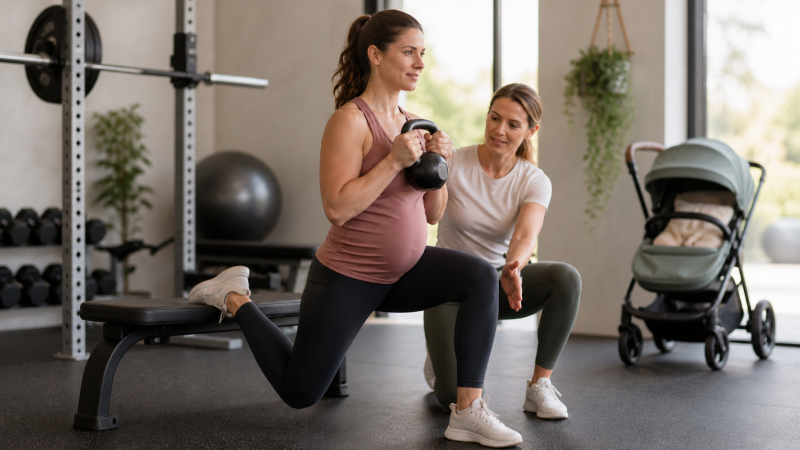
Wochenbettdepression und Return to Training – warum der Wiedereinstieg mehr ist als nur Sport
Wenn Körper und Psyche gleichzeitig regenerieren müssen
Anna war früher Marathonläuferin. Nach der Geburt ihres ersten Kindes bestimmten jedoch Schlafmangel, Erschöpfung und emotionale Belastung ihren Alltag. Statt an Training war kaum zu denken. Erst das Gespräch mit ihrer Hebamme machte deutlich, dass hinter ihren Beschwerden eine Wochenbettdepression stehen könnte – und nicht mangelnde Belastbarkeit.
Die Zeit nach der Geburt ist von tiefgreifenden körperlichen, hormonellen und psychischen Veränderungen geprägt. Diese beeinflussen nicht nur die Rückbildung, sondern auch Motivation, Leistungsfähigkeit und den Wiedereinstieg in Bewegung. Während der sogenannte Baby Blues meist innerhalb weniger Tage wieder verschwindet, ist eine Wochenbettdepression behandlungsbedürftig und kann über Monate bestehen bleiben. Schlafmangel, hormonelle Veränderungen, Geburtsverletzungen, Stillprobleme oder fehlende Unterstützung erhöhen das Risiko zusätzlich.
Gleichzeitig zeigt die Forschung: Bewegung kann depressive Symptome positiv beeinflussen. Sanftes Training, Rückbildung und regelmäßige körperliche Aktivität fördern nicht nur die körperliche Erholung, sondern können auch das psychische Wohlbefinden verbessern – vorausgesetzt, Intensität und Umfang werden individuell angepasst.
Warum Geduld der wichtigste Trainingspartner ist
Das Wochenbett ist keine Phase für Höchstleistungen, sondern für Heilung. Im Vordergrund stehen zunächst Erholung, Wahrnehmung des Beckenbodens und die schrittweise Rückkehr in Bewegung. Je nach Geburtsverlauf – vaginal oder per Kaiserschnitt – unterscheiden sich Belastbarkeit und Trainingsbeginn deutlich.
Ein nachhaltiger Trainingsaufbau berücksichtigt nicht nur Muskulatur und Ausdauer, sondern ebenso Wundheilung, Beckenbodenfunktion, Schlaf, Ernährung und die individuelle Lebenssituation. Gerade im Alltag mit einem Baby sind realistische Ziele und flexible Trainingsmöglichkeiten entscheidend für langfristigen Erfolg.
Return to Training: Mehr als nur körperliche Fitness
Der Wiedereinstieg in den Sport ist immer individuell. Körperliche Voraussetzungen, psychische Belastungen, Zeitmangel, soziale Unterstützung und persönliche Ziele bestimmen, wann und wie Training sinnvoll ist. Inspirierende Beispiele zeigen zwar, dass eine Rückkehr auf hohem Niveau möglich sein kann – sie verdeutlichen aber ebenso, wie wichtig Geduld, professionelle Begleitung und ein schrittweiser Aufbau sind.
Besonders Krafttraining und Laufen stellen nach der Geburt erhöhte Anforderungen an Rumpfstabilität und Beckenboden. Ein zu schneller Einstieg kann Beschwerden verstärken, während eine strukturierte Progression die Grundlage für eine sichere Rückkehr in den Sport schafft.
Der richtige Zeitpunkt entscheidet
Ob Krafttraining oder der erste Lauf – nicht das Datum nach der Geburt entscheidet über die Belastbarkeit, sondern die individuelle Regeneration. Schmerzfreiheit, eine gute Kontrolle der Körpermitte und die körperliche sowie mentale Bereitschaft bilden die Grundlage für den nächsten Trainingsschritt.
Deshalb orientiert sich modernes postpartales Training nicht an starren Zeitplänen, sondern an klaren Kriterien und einer schrittweisen Belastungssteigerung. So lassen sich Überlastungen vermeiden und gleichzeitig langfristige Fortschritte erzielen.
In der vollständigen Academy-Version erfährst du unter anderem:
- welche Phasen der Trainingsrückkehr sinnvoll sind,
- wie der Wiedereinstieg ins Krafttraining und Laufen Schritt für Schritt aufgebaut wird,
- welche Tests vor dem ersten Lauf erfüllt sein sollten,
- welche Warnsignale gegen eine Belastungssteigerung sprechen,
- welche Trainingspläne sich in den ersten Wochen und Monaten nach der Geburt bewährt haben und
- wie Therapeutinnen und Therapeuten Frauen evidenzbasiert auf ihrem Weg zurück in den Sport begleiten.
Dein DK Sports & Physio Team aus der Karlsruher Oststadt
Den ausführlichen Artikel findest du in unserer DK Academy.
Wir geben Physiotherapeuten, Trainern und allen Wissbegierigen einen sachlichen Einblick in die Physiotherapie und helfen so die Rehabilitation und das Training nach Verletzungen oder Beschwerden effizienter zu gestalten.
Sichere dir vollen Zugriff auf unsere Rehab Live Sessions, exklusive Review- und Blogartikel, Simple Tipps und Infografiken.
Du benötigst Physiotherapie im Raum Karlsruhe? Dann sind wir gerne für dich da und unterstützen dich!
Dein DK Sports & Physio Team aus der Karlsruher Oststadt
Unsere weiteren Blog-Artikel
Training als Medikament bei Multipler Sklerose?

Vegane Ernährung im Leistungssport – zwischen Planung, Evidenz und Performance
MTSS oder LIMP? Warum wir das „Schienbeinkantensyndrom“ neu denken müssen
Glutenunverträglichkeit – alles nur Kopfsache?

Airex-Kissen & Bosu-Bälle – Spielzeug oder kann das weg?
Warum wir über die Reruptur des Kreuzbandes sprechen müssen

Arroganz in der Physiotherapie? Zwischen Wissen und Gewissheit
Quellenangaben:
[1] A. Deprato u. a., „Impact of postpartum physical activity on maternal depression and anxiety: a systematic review and meta-analysis“, Br. J. Sports Med., Bd. 59, Nr. 8, S. 550–561, Apr. 2025, doi: 10.1136/bjsports-2024-108478.
[2] J. M. Schulz, H. Marmura, C. M. Hewitt, L. J. Parkinson, und J. S. Thornton, „Navigating the ‘new normal’: what guidelines exist for postpartum return to physical activity and sport? A scoping review“, Br. J. Sports Med., Bd. 57, Nr. 24, S. 1573–1578, Dez. 2023, doi: 10.1136/bjsports-2023-107166.
[3] M. J. Gervais u. a., „Impact of postpartum physical activity on maternal anthropometrics: a systematic review and meta-analysis“, Br. J. Sports Med., Bd. 59, Nr. 8, S. 605–617, Apr. 2025, doi: 10.1136/bjsports-2024-108449.
[4] P. A. T. Jones u. a., „Impact of postpartum physical activity on cardiometabolic health, breastfeeding, injury and infant growth and development: a systematic review and meta-analysis“, Br. J. Sports Med., Bd. 59, Nr. 8, S. 539–549, Apr. 2025, doi: 10.1136/bjsports-2024-108483.
[5] M. H. Davenport, R. Khurana, J. S. Thornton, und T.-L. F. McHugh, „“It’s going to affect our lives, our sport and our career”: time to raise the bar for pregnant and postpartum athletes“, Br. J. Sports Med., Bd. 57, Nr. 14, S. 893–894, Juli 2023, doi: 10.1136/bjsports-2023-107256.
[6] M. Schünke, E. Schulte, und U. Schumacher, PROMETHEUS Allgemeine Anatomie und Bewegungssystem, 6., Vollständig überarbeitete und Erweiterte Auflage 2022.
[7] P. Ioannidou, THE FEMALE ATHLETE TRAINING PRÄ & POSTPARTUM.
[8] P. Ioannidou, „Training in der Schwangerschaft 3.0“.
[9] T. Afifi u. a., „Infographic. Head to toe considerations for the postpartum endurance athlete“, Br. J. Sports Med., Bd. 58, Nr. 11, S. 630–632, Juni 2024, doi: 10.1136/bjsports-2023-107624.
[10] S. Becker, M. Fedtke, T. Fehm, D. Wallwiener, und B. Aydeniz, „Entwicklung des Körpergewichts vor, während und ein Jahr nach der Schwangerschaft“, Geburtshilfe Frauenheilkd., Bd. 64, Nr. 07, S. 706–710, Juli 2004, doi: 10.1055/s-2004-821115.
[11] S. Mørkved und K. Bø, „Effect of pelvic floor muscle training during pregnancy and after childbirth on prevention and treatment of urinary incontinence: a systematic review“, Br. J. Sports Med., Bd. 48, Nr. 4, S. 299–310, Feb. 2014, doi: 10.1136/bjsports-2012-091758.
[12] N. F. Beamish u. a., „Impact of postpartum exercise on pelvic floor disorders and diastasis recti abdominis: a systematic review and meta-analysis“, Br. J. Sports Med., Bd. 59, Nr. 8, S. 562–575, Apr. 2025, doi: 10.1136/bjsports-2024-108619.
[13] P. Abrams u. a., „The standardisation of terminology in lower urinary tract function: report from the standardisation sub-committee of the International Continence Society“, Urology, Bd. 61, Nr. 1, S. 37–49, Jan. 2003, doi: 10.1016/S0090-4295(02)02243-4.
[14] G. Naumann u. a., „Diagnosis and Therapy of Female Urinary Incontinence. Guideline of the DGGG, OEGGG and SGGG (S2k-Level, AWMF Registry No. 015/091, January 2022): Part 1 with Recommendations on Diagnostics and Conservative and Medical Treatment“, Geburtshilfe Frauenheilkd., Bd. 83, Nr. 04, S. 377–409, Apr. 2023, doi: 10.1055/a-1967-1726.
[15] B. Sangsawang und N. Sangsawang, „Stress urinary incontinence in pregnant women: a review of prevalence, pathophysiology, and treatment“, Int. Urogynecology J., Bd. 24, Nr. 6, S. 901–912, Juni 2013, doi: 10.1007/s00192-013-2061-7.
[16] M. Hübner, C. Rothe, C. Plappert, und K. Baeßler, „Aspects of Pelvic Floor Protection in Spontaneous Delivery – a Review“, Geburtshilfe Frauenheilkd., Bd. 82, Nr. 4, S. 400–409, Apr. 2022, doi: 10.1055/a-1515-2622.
[17] I. Hösli, „Beckenboden in der Schwangerschaft und unter der Geburt“, Ther. Umsch., Bd. 67, Nr. 1, S. 11–18, Jan. 2010, doi: 10.1024/0040-5930/a000003.
[18] K. L. Skaug, M. E. Engh, H. Frawley, und K. Bø, „Prevalence of Pelvic Floor Dysfunction, Bother, and Risk Factors and Knowledge of the Pelvic Floor Muscles in Norwegian Male and Female Powerlifters and Olympic Weightlifters“, J. Strength Cond. Res., Bd. 36, Nr. 10, S. 2800–2807, Okt. 2022, doi: 10.1519/JSC.0000000000003919.
[19] J. Petrizzo, R. Alter-Petrizzo, J. Wygand, und R. M. Otto, „Stress Urinary Incontinence in Female Powerlifting: A Survey 2984 Board #267 June 1 3 30 PM – 5 00 PM“, Med. Sci. Sports Exerc., Bd. 50, Nr. 5S, S. 741, Mai 2018, doi: 10.1249/01.mss.0000538444.72232.53.
[20] L. B. Forner, E. M. Beckman, und M. D. Smith, „Symptoms of pelvic organ prolapse in women who lift heavy weights for exercise: a cross-sectional survey“, Int. Urogynecology J., Bd. 31, Nr. 8, S. 1551–1558, Aug. 2020, doi: 10.1007/s00192-019-04163-w.
[21] H. Pang u. a., „A nationwide population-based survey on the prevalence and risk factors of symptomatic pelvic organ prolapse in adult women in China – a pelvic organ prolapse quantification system-based study“, BJOG Int. J. Obstet. Gynaecol., Bd. 128, Nr. 8, S. 1313–1323, Juli 2021, doi: 10.1111/1471-0528.16675.
[22] M. H. Davenport u. a., „2025 Canadian guideline for physical activity, sedentary behaviour and sleep throughout the first year post partum“, Br. J. Sports Med., Bd. 59, Nr. 8, S. 515–526, Apr. 2025, doi: 10.1136/bjsports-2025-109785.
[23] K. R. Evenson u. a., „Guidelines for Physical Activity During Pregnancy: Comparisons From Around the World“, Am. J. Lifestyle Med., Bd. 8, Nr. 2, Art. Nr. 2, März 2014, doi: 10.1177/1559827613498204.
[24] N. Ferrari und C. Graf, „Bewegungsempfehlungen für Frauen während und nach der Schwangerschaft“, Gesundheitswesen, Bd. 79, Nr. S 01, S. S36–S39, Apr. 2017, doi: 10.1055/s-0042-123698.
[25] A. Rantell, Sexual Function and Pelvic Floor Dysfunction: A Guide for Nurses and Allied Health Professionals. Cham: Springer International Publishing AG, 2021.
[26] L. Stüpp, A. P. M. Resende, E. Oliveira, R. A. Castro, M. J. B. C. Girão, und M. G. F. Sartori, „Pelvic floor muscle training for treatment of pelvic organ prolapse: an assessor-blinded randomized controlled trial“, Int. Urogynecology J., Bd. 22, Nr. 10, S. 1233–1239, Okt. 2011, doi: 10.1007/s00192-011-1428-x.
[27] S. Hagen und D. Stark, „Conservative prevention and management of pelvic organ prolapse in women“, Cochrane Database Syst. Rev., Dez. 2011, doi: 10.1002/14651858.CD003882.pub4.
[28] M. Sulprizio, R. Löw, B. Schulte-Frei, und L. Jäger, „Trainingsempfehlungen zum Sport in und nach der Schwangerschaft“, in Sport in der Schwangerschaft, M. Sulprizio und J. Kleinert, Hrsg., Berlin, Heidelberg: Springer Berlin Heidelberg, 2016, S. 69–80. doi: 10.1007/978-3-662-48760-0_7.
[29] S. Hagen u. a., „Individualised pelvic floor muscle training in women with pelvic organ prolapse (POPPY): a multicentre randomised controlled trial“, The Lancet, Bd. 383, Nr. 9919, S. 796–806, März 2014, doi: 10.1016/S0140-6736(13)61977-7.
[30] C. Dumoulin u. a., „Conservative management for female urinary incontinence and pelvic organ prolapse review 2013: Summary of the 5th International Consultation on Incontinence“, Neurourol. Urodyn., Bd. 35, Nr. 1, S. 15–20, Jan. 2016, doi: 10.1002/nau.22677.
[31] C. Li, Y. Gong, und B. Wang, „The efficacy of pelvic floor muscle training for pelvic organ prolapse: a systematic review and meta-analysis“, Int. Urogynecology J., Bd. 27, Nr. 7, S. 981–992, Juli 2016, doi: 10.1007/s00192-015-2846-y.
[32] C. J. Dru und J. T. Anger, „Managing mild, symptomatic pelvic organ prolapse“, BMJ, Bd. 349, Nr. dec22 2, S. g7698–g7698, Dez. 2014, doi: 10.1136/bmj.g7698.
[33] L. Herrington, „Assessment of the degree of pelvic tilt within a normal asymptomatic population“, Man. Ther., Bd. 16, Nr. 6, Art. Nr. 6, Dez. 2011, doi: 10.1016/j.math.2011.04.006.
[34] V. L. Murrie, A. K. Dixon, W. Hollingworth, H. Wilson, und T. A. C. Doyle, „Lumbar lordosis: Study of patients with and without low back pain“, Clin. Anat., Bd. 16, Nr. 2, Art. Nr. 2, März 2003, doi: 10.1002/ca.10114.
[35] M. E. Franklin und T. Conner-Kerr, „An Analysis of Posture and Back Pain in the First and Third Trimesters of Pregnancy“, J. Orthop. Sports Phys. Ther., Bd. 28, Nr. 3, Art. Nr. 3, Sep. 1998, doi: 10.2519/jospt.1998.28.3.133.
[36] S. Gluppe, M. Ellström Engh, und B. Kari, „Women with diastasis recti abdominis might have weaker abdominal muscles and more abdominal pain, but no higher prevalence of pelvic floor disorders, low back and pelvic girdle pain than women without diastasis recti abdominis“, Physiotherapy, Bd. 111, S. 57–65, Juni 2021, doi: 10.1016/j.physio.2021.01.008.
[37] D. R. Benjamin, A. T. M. Van De Water, und C. L. Peiris, „Effects of exercise on diastasis of the rectus abdominis muscle in the antenatal and postnatal periods: a systematic review“, Physiotherapy, Bd. 100, Nr. 1, S. 1–8, März 2014, doi: 10.1016/j.physio.2013.08.005.
[38] S. Shohaimi, N. R. N. Husain, F. M. Zaki, und I. K. Atan, „Split Tummy Exercise Program for Reducing Diastasis Recti in Postpartum Primigravidae: A Randomized Controlled Trial“, Korean J. Fam. Med., Bd. 44, Nr. 2, S. 102–108, März 2023, doi: 10.4082/kjfm.22.0035.
[39] Abdullah u. a., „Comparative Efficacy of Abdominal Exercises and Abdominal Binding on Diastasis Recti Abdominis Reduction in Postpartum Women: A Systematic Review and Meta‐Analysis of Randomized Controlled Trials“, Physiother. Res. Int., Bd. 30, Nr. 2, S. e70038, Apr. 2025, doi: 10.1002/pri.70038.
[40] K. M. McEvoy, D. Rayapati, K. O. Washington Cole, C. Erdly, J. L. Payne, und L. M. Osborne, „Poor Postpartum Sleep Quality Predicts Subsequent Postpartum Depressive Symptoms in a High-Risk Sample“, J. Clin. Sleep Med., Bd. 15, Nr. 09, S. 1303–1310, Sep. 2019, doi: 10.5664/jcsm.7924.
[41] M. Stüwe, Wochenbett- und Rückbildungsgymnastik, 2., korr. Aufl. in edition hebamme. Stuttgart: Hippokrates, 2004.
[42] U. Korsten-Reck, „Schwangerschaft und Sport: Teil 2: Praktische Empfehlungen für sporttreibende Frauen in Schwangerschaft und Wochenbett“, Gynäkol., Bd. 44, Nr. 11, S. 929–936, Nov. 2011, doi: 10.1007/s00129-011-2867-7.
[43] J. D. LeCheminant u. a., „Effect of resistance training on body composition, self‐efficacy, depression, and activity in postpartum women“, Scand. J. Med. Sci. Sports, Bd. 24, Nr. 2, S. 414–421, Apr. 2014, doi: 10.1111/j.1600-0838.2012.01490.x.
[44] I. S. Moore, M. L. James, E. Brockwell, J. Perkins, A. L. Jones, und G. M. Donnelly, „Multidisciplinary, biopsychosocial factors contributing to return to running and running related stress urinary incontinence in postpartum women“, Br. J. Sports Med., Bd. 55, Nr. 22, S. 1286–1292, Nov. 2021, doi: 10.1136/bjsports-2021-104168.
[45] G. M. Donnelly, I. S. Moore, E. Brockwell, A. Rankin, und R. Cooke, „Reframing return-to-sport postpartum: the 6 Rs framework“, Br. J. Sports Med., Bd. 56, Nr. 5, S. 244–245, März 2022, doi: 10.1136/bjsports-2021-104877.
[46] B. J. Tighe, S. L. Williams, C. Porter, und M. Hayman, „Barriers and enablers influencing female athlete return-to-sport postpartum: a scoping review“, Br. J. Sports Med., Bd. 57, Nr. 22, S. 1450–1456, Nov. 2023, doi: 10.1136/bjsports-2023-107189.
[47] M. H. Davenport, G. Bains, M. Hayman, C. Cai, N. S. Mkumbuzi, und T.-L. McHugh, „Advancing gender equity in sport: a scoping review of international sport federation policies for pregnant, postpartum and parenting elite athletes“, Br. J. Sports Med., S. bjsports-2024-109135, Apr. 2025, doi: 10.1136/bjsports-2024-109135.
[48] K. Bø u. a., „Exercise and pregnancy in recreational and elite athletes: 2016/2017 evidence summary from the IOC expert group meeting, Lausanne. Part 5. Recommendations for health professionals and active women“, Br. J. Sports Med., Bd. 52, Nr. 17, S. 1080–1085, Sep. 2018, doi: 10.1136/bjsports-2018-099351.
[49] L. Woodroffe, T. Slayman, A. Paulson, N. Kruse, A. Mancuso, und M. Hall, „Return to Running for Postpartum Elite and Subelite Athletes“, Sports Health, S. 19417381241256973, Juni 2024, doi: 10.1177/19417381241256973.
[50] G. M. Donnelly, A. Rankin, H. Mills, M. De Vivo, T. S. Goom, und E. Brockwell, „Infographic. Guidance for medical, health and fitness professionals to support women in returning to running postnatally“, Br. J. Sports Med., Bd. 54, Nr. 18, S. 1114–1115, Sep. 2020, doi: 10.1136/bjsports-2020-102139.
[51] R. Selman, K. Early, B. Battles, M. Seidenburg, E. Wendel, und S. Westerlund, „Maximizing Recovery in the Postpartum Period: A Timeline for Rehabilitation from Pregnancy through Return to Sport“, Int. J. Sports Phys. Ther., Bd. 17, Nr. 6, S. 1170–1183, 2022, doi: 10.26603/001c.37863.
[52] S. M. Christopher, C. E. Cook, und S. J. Snodgrass, „What are the biopsychosocial risk factors associated with pain in postpartum runners? Development of a clinical decision tool“, PloS One, Bd. 16, Nr. 8, S. e0255383, 2021, doi: 10.1371/journal.pone.0255383.
[53] N. Richard, V. Claydon, M. Koehle, und A. Coté, „Sprint interval training in the postpartum period maintains the enhanced cardiac output of pregnancy: A case study“, Exp. Physiol., Bd. 109, Nr. 10, S. 1629–1636, Okt. 2024, doi: 10.1113/EP091994.
[54] C. Brites-Lagos, C. Maranhão, A. Szumilewicz, und R. Santos-Rocha, „Development and validation of the physical exercise program ‚Active Mums‘ for postpartum recovery: application of the CReDECI-2 guidelines“, BMC Pregnancy Childbirth, Bd. 24, Nr. 1, S. 378, Mai 2024, doi: 10.1186/s12884-024-06387-1.