
Plantarfasziitis oder Plantarfasziopathie – Ursachen und Lösungen bei Fersenschmerzen
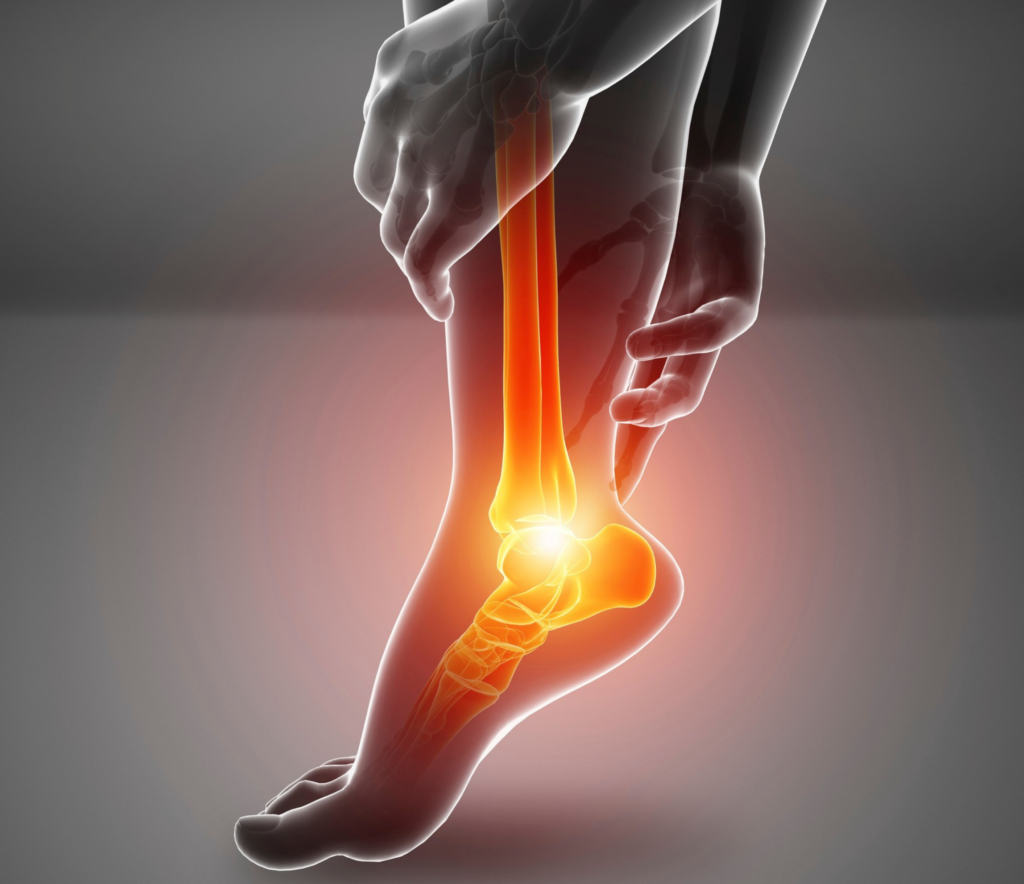
Plantarfasziopathie: Warum Fersenschmerzen oft hartnäckiger sind als gedacht
Ein stechender Schmerz unter der Ferse bei den ersten Schritten am Morgen – für viele beginnt so der Tag. Die sogenannte Plantarfasziitis, heute treffender als Plantarfasziopathie bezeichnet, gehört zu den häufigsten Ursachen für Fersenschmerzen und betrifft nicht nur Läufer, sondern auch Menschen mit überwiegend sitzender Lebensweise. Etwa jeder Zehnte entwickelt die Beschwerden im Laufe seines Lebens. Die gute Nachricht: Rund 90 Prozent der Betroffenen werden innerhalb eines Jahres mit konservativen Maßnahmen beschwerdefrei. Der Weg dorthin ist jedoch oft komplexer, als viele vermuten.
Mehr als nur eine Entzündung
Der Begriff „Plantarfasziitis“ suggeriert eine Entzündung der Plantarfaszie. Tatsächlich zeigen wissenschaftliche Untersuchungen jedoch, dass es sich überwiegend um eine degenerative Veränderung des Gewebes handelt. Deshalb setzt sich zunehmend die Bezeichnung Plantarfasziopathie durch. Dieses Verständnis verändert auch den Blick auf die Behandlung: Nicht allein Entzündungshemmung steht im Mittelpunkt, sondern die Wiederherstellung der Belastbarkeit des Gewebes.
Warum entsteht die Plantarfasziopathie?
Die Plantarfaszie stabilisiert das Fußgewölbe und wirkt bei jedem Schritt wie eine Feder, die Energie speichert und wieder freisetzt. Wird sie dauerhaft überlastet, können Mikroverletzungen entstehen. Häufig spielen mehrere Faktoren gleichzeitig eine Rolle: eingeschränkte Beweglichkeit des Sprunggelenks, Fußfehlstellungen, Überlastung durch langes Stehen oder Laufen, plötzliche Trainingssteigerungen, ungeeignetes Schuhwerk oder ein erhöhter Body-Mass-Index. Gerade das Zusammenspiel verschiedener Risikofaktoren scheint die Entstehung der Beschwerden zu begünstigen.
Wie wird die Diagnose gestellt?
Die Diagnose erfolgt meist anhand der typischen Beschwerden und einer körperlichen Untersuchung. Charakteristisch sind Schmerzen an der Innenseite der Ferse, besonders nach Ruhephasen oder morgens nach dem Aufstehen. Spezifische Funktionstests helfen dabei, die Plantarfaszie gezielt zu beurteilen. Bildgebende Verfahren wie Ultraschall oder MRT kommen vor allem dann zum Einsatz, wenn die Diagnose unklar ist oder andere Ursachen ausgeschlossen werden müssen.
Welche Behandlung hilft wirklich?
Die wissenschaftliche Evidenz zeigt, dass es keine universelle Standardtherapie gibt. Dehnübungen, Einlagen, Stoßwellentherapie, Injektionen oder Platelet-Rich-Plasma werden häufig eingesetzt, ihre Wirksamkeit fällt jedoch unterschiedlich aus. Besonders in den letzten Jahren rückt ein anderer Ansatz immer stärker in den Fokus: gezieltes Krafttraining kombiniert mit einer kontrollierten Belastungssteuerung (Loadmanagement). Statt vollständiger Schonung geht es darum, die Belastung individuell anzupassen und schrittweise zu steigern, damit sich die Plantarfaszie langfristig anpassen und belastbarer werden kann.
Der entscheidende Faktor für langfristigen Erfolg
Viele Betroffene konzentrieren sich ausschließlich auf Schmerzreduktion. Aktuelle Erkenntnisse zeigen jedoch, dass der langfristige Erfolg häufig davon abhängt, wie Belastung gesteuert wird, welche Übungen sinnvoll sind und welche Fehler den Heilungsverlauf unnötig verlängern können. Genau hier unterscheiden sich moderne Behandlungskonzepte deutlich von klassischen Empfehlungen.
In der Academy erfährst du unter anderem:
- welche Therapieformen wissenschaftlich wirklich überzeugen,
- warum vollständige Schonung häufig kontraproduktiv ist,
- wie ein effektives Loadmanagement praktisch umgesetzt wird,
- welche Übungen in welcher Phase sinnvoll sind,
- wann eine Operation tatsächlich infrage kommt und
- wie sich Rückfälle langfristig vermeiden lassen.
Dein DK Sports & Physio Team aus der Karlsruher Oststadt
Den ausführlichen Artikel findest du in unserer DK Academy.
Wir geben Physiotherapeuten, Trainern und allen Wissbegierigen einen sachlichen Einblick in die Physiotherapie und helfen so die Rehabilitation und das Training nach Verletzungen oder Beschwerden effizienter zu gestalten.
Sichere dir vollen Zugriff auf unsere Rehab Live Sessions, exklusive Review- und Blogartikel, Simple Tipps und Infografiken.

Du benötigst Physiotherapie im Raum Karlsruhe? Dann sind wir gerne für dich da und unterstützen dich!
Dein DK Sports & Physio Team aus der Karlsruher Oststadt
Unsere weiteren Blog-Artikel

Training als Medikament bei Multipler Sklerose?

Vegane Ernährung im Leistungssport – zwischen Planung, Evidenz und Performance
MTSS oder LIMP? Warum wir das „Schienbeinkantensyndrom“ neu denken müssen

Glutenunverträglichkeit – alles nur Kopfsache?

Airex-Kissen & Bosu-Bälle – Spielzeug oder kann das weg?
Warum wir über die Reruptur des Kreuzbandes sprechen müssen

Arroganz in der Physiotherapie? Zwischen Wissen und Gewissheit
Quellenangaben:
[1] Al-Abbad, H., Allen, S., Morris, S., Reznik, J., Biros, E., Paulik, B. & Wright, A. (2020). The effects of shockwave therapy on musculoskeletal conditions based on changes in imaging: a systematic review and meta-analysis with meta-regression. BMC Musculoskeletal Disorders, 21(1). https://doi.org/10.1186/s12891-020-03270-w
[2] Agyekum, E. K. & Ma, K. (2015). Heel pain: A systematic review. Chinese Journal of Traumatology, 18(3), 164–169. https://doi.org/10.1016/j.cjtee.2015.03.002
[3] Amini, F., Chiew, S. & Ramasamy, T. (2016). Effectiveness and relevant factors of platelet-rich plasma treatment in managing plantar fasciitis:A systematic review. Journal of Research in Medical Sciences, 21(1), 38. https://doi.org/10.4103/1735-1995.183988
[4] Arbab D, Bouillon B, Lüring C: Plantarfasziitis und der plantare Fersenschmerz – Diagnose und Therapie. OUP 2016; 12: 696–701 DOI 10.3238/oup.2016.0696–0701
[5] Buchbinder, R. (2004). Plantar Fasciitis. New England Journal of Medicine, 350(21), 2159–2166. https://doi.org/10.1056/nejmcp032745
[6] Bolgla, L. & Malone, T. (2004). Plantar Fasciitis and the Windlass Mechanism: A Biomechanical Link to Clinical Practice.
[7] Butterworth, P. A., Landorf, K. B., Smith, S. E. & Menz, H. B. (2012). The association between body mass index and musculoskeletal foot disorders: a systematic review. Obesity Reviews, 13(7), 630–642. https://doi.org/10.1111/j.1467-789x.2012.00996.x
[8] Chen, C. M., Lee, M., Lin, C. H., Chang, C. H. & Lin, C. H. (2018). Comparative efficacy of corticosteroid injection and non-invasive treatments for plantar fasciitis: a systematic review and meta-analysis. Scientific Reports, 8(1). https://doi.org/10.1038/s41598-018-22402-w
[9] Cheung, J. T. M., Zhang, M. & An, K. N. (2006). Effect of Achilles tendon loading on plantar fascia tension in the standing foot. Clinical Biomechanics, 21(2), 194–203. https://doi.org/10.1016/j.clinbiomech.2005.09.016
[10] Colakovic, H. (2019). Wenn die Sohle schmerzt – Evidenz-Update Plantarfasziitis. physiopraxis, 17(05), 20–25. https://doi.org/10.1055/a-0867-66247
[11] Cornwall, M. W. & McPoil, T. G. (1999). Plantar Fasciitis: Etiology and Treatment. Journal of Orthopaedic & Sports Physical Therapy, 29(12), 756–760. https://doi.org/10.2519/jospt.1999.29.12.756
[12] Covey CJ, Mulder DM. Plantar fasciitis: How best to treat?. Journal of Family Practice 2013; 9: 466-472
[13] Crawford, F. & Thomson, C. E. (2003). Interventions for treating plantar heel pain. Cochrane Database of Systematic Reviews. https://doi.org/10.1002/14651858.cd000416
[14] Davies, M. S., Weiss, G. A. & Saxby, T. S. (1999). Plantar Fasciitis: How Successful Is Surgical Intervention? Foot & Ankle International, 20(12), 803–807. https://doi.org/10.1177/107110079902001209
[15] Franceschi, F., Papalia, R., Paciotti, M., Franceschetti, E., di Martino, A., Maffulli, N. & Denaro, V. (2014). Obesity as a Risk Factor for Tendinopathy: A Systematic Review. International Journal of Endocrinology, 2014, 1–10. https://doi.org/10.1155/2014/670262
[16] Fusini, F. (2017). Real-time sonoelastography: principles and clinical applications in tendon disorders. Muscles, Ligaments and Tendons Journal, 7(3), 467. https://doi.org/10.11138/mltj/2017.7.3.467
Goff JD, Crawford R. Diagnosis and Treatment of PF. American Family Physician. 2011; 84: 676-682.
[17] Gutteck, N., Schilde, S. & Delank, K. S. (2019). Pain on the Plantar Surface of the Foot. Deutsches Ärzteblatt international. https://doi.org/10.3238/arztebl.2019.0083
[18] Huffer, D., Hing, W., Newton, R. & Clair, M. (2017). Strength training for plantar fasciitis and the intrinsic foot musculature: A systematic review. Physical Therapy in Sport, 24, 44–52. https://doi.org/10.1016/j.ptsp.2016.08.008
[19] Hunter, L. J. & Fortune, J. (2000). Foot and ankle biomechanics. South African Journal of Physiotherapy, 56(1), 17–20. https://doi.org/10.4102/sajp.v56i1.546
[20] Irving, D., Cook, J. & Menz, H. (2006). Factors associated with chronic plantar heel pain: a systematic review. Journal of Science and Medicine in Sport, 9(1–2), 11–22. https://doi.org/10.1016/j.jsams.2006.02.004
[21] Klein, S. E., Dale, A. M., Hayes, M. H., Johnson, J. E., McCormick, J. J. & Racette, B. A. (2012). Clinical Presentation and Self-Reported Patterns of Pain and Function in Patients with Plantar Heel Pain. Foot & Ankle International, 33(9), 693–698. https://doi.org/10.3113/fai.2012.0693
[22] La Porta, G. A. & La Fata, P. C. (2005). Pathologic conditions of the plantar fascia. Clinics in Podiatric Medicine and Surgery, 22(1), 1–9. https://doi.org/10.1016/j.cpm.2004.08.001
[23] LI, Z., YU, A., QI, B., ZHAO, Y., WANG, W., LI, P. & DING, J. (2015). Corticosteroid versus placebo injection for plantar fasciitis: A meta-analysis of randomized controlled trials. Experimental and Therapeutic Medicine, 9(6), 2263–2268. https://doi.org/10.3892/etm.2015.2384
[24] Lopes, A. D., Hespanhol, L. C., Yeung, S. S. & Costa, L. O. P. (2012). What are the Main Running-Related Musculoskeletal Injuries? Sports Medicine, 42(10), 891–905. https://doi.org/10.1007/bf03262301
[25] McMillan, A. M., Landorf, K. B., Barrett, J. T., Menz, H. B. & Bird, A. R. (2009). Diagnostic imaging for chronic plantar heel pain: a systematic review and meta-analysis. Journal of Foot and Ankle Research, 2(1). https://doi.org/10.1186/1757-1146-2-32
[26] Mohseni-Bandpei, M. A., Nakhaee, M., Mousavi, M. E., Shakourirad, A., Safari, M. R. & Vahab Kashani, R. (2014). Application of Ultrasound in the Assessment of Plantar Fascia in Patients With Plantar Fasciitis: A Systematic Review. Ultrasound in Medicine & Biology, 40(8), 1737–1754. https://doi.org/10.1016/j.ultrasmedbio.2014.03.001
[27] Pfeffer, G., Bacchetti, P., Deland, J., Lewis, A., Anderson, R., Davis, W., Alvarez, R., Brodsky, J., Cooper, P., Frey, C., Herhck, R., Myerson, M., Sammarco, J., Janecki, C., Ross, S., Bowman, M. & Smith, R. (1999). Comparison of Custom and Prefabricated Orthoses in the Initial Treatment of Proximal Plantar Fasciitis. Foot & Ankle International, 20(4), 214–221. https://doi.org/10.1177/107110079902000402
[28] Porter, D., Barrill, E., Oneacre, K. & May, B. D. (2002). The Effects of Duration and Frequency of Achilles Tendon Stretching on Dorsiflexion and Outcome in Painful Heel Syndrome: A Randomized, Blinded, Control Study. Foot & Ankle International, 23(7), 619–624. https://doi.org/10.1177/107110070202300706
[29] Powell, M., Post, W. R., Keener, J. & Wearden, S. (1998). Effective Treatment of Chronic Plantar Fasciitis with Dorsiflexion Night Splints: A Crossover Prospective Randomized Outcome Study. Foot & Ankle International, 19(1), 10–18. https://doi.org/10.1177/107110079801900103
[30] Radwan A., Wyland M., Applequist L., Bolowsky E., Klingensmith H., Virag I. Ultrasonography, an effective tool in diagnosing plantar fasciitis: A systematic review of diagnostic trials. Int. J. Sports Phys. Ther. 2016;11:663–671
[31] Rhim, H. C., Kwon, J., Park, J., Borg-Stein, J. & Tenforde, A. S. (2021). A Systematic Review of Systematic Reviews on the Epidemiology, Evaluation, and Treatment of Plantar Fasciitis. Life, 11(12), 1287. https://doi.org/10.3390/life11121287
[32] Roxas M. Plantar fasciitis: diagnosis and therapeutic considerations. Altern Med Rev 2005; 10: 83-93
[33] Schulte, E., Schumacher, U., Schünke, M., Voll, M. & Wesker, K. H. (2011). PROMETHEUS LernAtlas der Anatomie: Allgemeine Anatomie und Bewegungssystem (3., überarbeitete und erweiterte Aufl.). Thieme
[34] Schwering, L. (2016). Die Plantaraponeurose und der Seilwindenmechanismus des Fußes. Orthopädieschuhtechnik.
[35] Speed, C. (2013). A systematic review of shockwave therapies in soft tissue conditions: focusing on the evidence. British Journal of Sports Medicine, 48(21), 1538–1542. https://doi.org/10.1136/bjsports-2012-091961
[36] Sweeting, D., Parish, B., Hooper, L. & Chester, R. (2011). The effectiveness of manual stretching in the treatment of plantar heel pain: a systematic review. Journal of Foot and Ankle Research, 4(1). https://doi.org/10.1186/1757-1146-4-19
[37] van Leeuwen, K. D. B., Rogers, J., Winzenberg, T. & van Middelkoop, M. (2015). Higher body mass index is associated with plantar fasciopathy/‘plantar fasciitis’: systematic review and meta-analysis of various clinical and imaging risk factors. British Journal of Sports Medicine, 50(16), 972–981. https://doi.org/10.1136/bjsports-2015-094695
[38] Vannini, F., di Matteo, B., Filardo, G., Kon, E., Marcacci, M. & Giannini, S. (2014). Platelet-rich plasma for foot and ankle pathologies: A systematic review. Foot and Ankle Surgery, 20(1), 2–9. https://doi.org/10.1016/j.fas.2013.08.001
[39] Wilk, B. R., Fisher, K. L. & Gutierrez, W. (2000). Defective Running Shoes as a Contributing Factor in Plantar Fasciitis in a Triathlete. Journal of Orthopaedic & Sports Physical Therapy, 30(1), 21–31. https://doi.org/10.2519/jospt.2000.30.1.21
[40] Wolgin, M., Cook, C., Graham, C. & Mauldin, D. (1994). Conservative Treatment of Plantar Heel Pain: Long-Term Follow-Up. Foot & Ankle International, 15(3), 97–102. https://doi.org/10.1177/107110079401500303
[41] Worrell, T. W., McCullough, M. & Pfeiffer, A. (1994). Effect of Foot Position on Gastrocnemius/Soleus Stretching in Subjects With Normal Flexibility. Journal of Orthopaedic & Sports Physical Therapy, 19(6), 352–356. https://doi.org/10.2519/jospt.1994.19.6.352
[42] Yi T.I., Lee G.E., Seo I.S., Huh W.S., Yoon T.H., Kim B.R. Clinical characteristics of the causes of plantar heel pain. Ann. Rehabil. Med. 2011;35:507–513
Young, C. (2012). Plantar Fasciitis. Annals of Internal Medicine, 156(1_Part_1), ITC1. https://doi.org/10.7326/0003-4819-156-1-201201030-01001