
Gelenkblockade – Was ist das eigentlich?
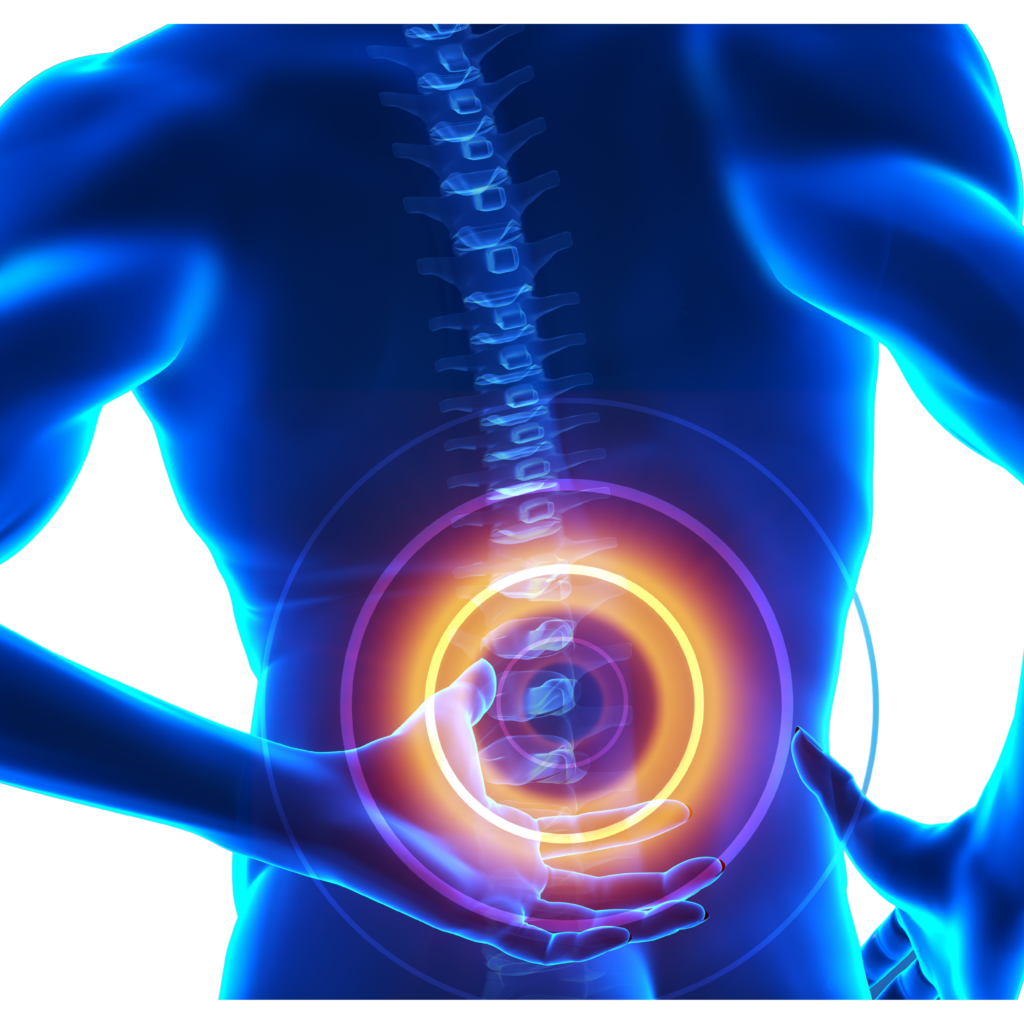
Gelenkblockade – was steckt wirklich dahinter?
„Ich habe da eine Blockade.“ – Ein Satz, der im therapeutischen Alltag ständig fällt. Doch was genau meinen Patient*innen eigentlich damit? Und noch wichtiger: Entspricht diese Vorstellung überhaupt dem aktuellen wissenschaftlichen Verständnis?
Die klassische Vorstellung: „Etwas sitzt fest“
Viele Menschen gehen davon aus, dass bei einer Gelenkblockade ein Gelenk „verschoben“, „ausgerenkt“ oder mechanisch blockiert ist. Diese Erklärung wirkt greifbar und logisch – schließlich treten Schmerzen und Bewegungseinschränkungen oft plötzlich auf.
Genau diese scheinbar einfache Erklärung hat jedoch einen Haken: Sie reduziert ein komplexes Geschehen auf ein rein mechanisches Problem.
Was tatsächlich dahintersteckt
Der Begriff „Gelenkblockade“ ist nicht klar definiert und wird in der Praxis sehr unterschiedlich verwendet. Häufig lässt sich keine eindeutige strukturelle Ursache nachweisen. Stattdessen spielen funktionelle Faktoren eine zentrale Rolle – etwa muskuläre Spannung, Schutzmechanismen oder veränderte Bewegungssteuerung.
Das bedeutet: Das Gefühl einer „Blockade“ ist real – aber die Ursache ist oft nicht das, was Patient*innen vermuten.
Warum diese Vorstellung problematisch ist
Die Idee eines „blockierten“ Gelenks hat direkte Auswirkungen auf das Verhalten von Patient*innen. Sie vermittelt:
- Im Körper stimmt „etwas nicht“
- Bewegung könnte gefährlich sein
- Nur eine externe Behandlung kann das Problem lösen
Diese Überzeugungen fördern eine passive Haltung und können den Genesungsprozess negativ beeinflussen.
Die Rolle der Kommunikation
Hier kommt die therapeutische Kommunikation ins Spiel. Wie ein Problem erklärt wird, prägt die Erwartungen und das Verhalten der Patient*innen maßgeblich.
Eine unreflektierte Verwendung des Begriffs „Blockade“ kann unbeabsichtigt genau die falschen Vorstellungen verstärken. Ziel sollte es daher sein, ein differenzierteres und hilfreicheres Verständnis zu vermitteln – ohne unnötige Angst zu erzeugen.
Ein moderner Blick auf Beschwerden
Statt sich ausschließlich auf die Idee einer „Blockade“ zu konzentrieren, rückt ein zeitgemäßer Ansatz andere Aspekte in den Fokus:
- aktive Bewegung
- individuelle Belastungssteuerung
- funktionelle Zusammenhänge
Der Körper wird nicht als „defekt“, sondern als anpassungsfähig verstanden.
Und jetzt wird es spannend…
Wenn der Begriff „Gelenkblockade“ so unklar ist – warum wird er dann immer noch so häufig verwendet?
Und welche konkreten Auswirkungen hat dieses Denken auf Therapieerfolg, Patientenerwartung und langfristige Gesundheit?
Die vollständige Analyse in der Academy zeigt, warum genau hier ein entscheidender Hebel für bessere Therapieergebnisse liegt – und was viele Behandler*innen dabei noch übersehen.
Dein DK Sports & Physio Team aus der Karlsruher Oststadt
Den ausführlichen Artikel findest du in unserer DK Academy.
Wir geben Physiotherapeuten, Trainern und allen Wissbegierigen einen sachlichen Einblick in die Physiotherapie und helfen so die Rehabilitation und das Training nach Verletzungen oder Beschwerden effizienter zu gestalten.
Sichere dir vollen Zugriff auf unsere Rehab Live Sessions, exklusive Review- und Blogartikel, Simple Tipps und Infografiken.

Du benötigst Physiotherapie im Raum Karlsruhe? Dann sind wir gerne für dich da und unterstützen dich!
Dein DK Sports & Physio Team aus der Karlsruher Oststadt
Unsere weiteren Blog-Artikel

Training als Medikament bei Multipler Sklerose?

Vegane Ernährung im Leistungssport – zwischen Planung, Evidenz und Performance

MTSS oder LIMP? Warum wir das „Schienbeinkantensyndrom“ neu denken müssen

Glutenunverträglichkeit – alles nur Kopfsache?

Airex-Kissen & Bosu-Bälle – Spielzeug oder kann das weg?
Warum wir über die Reruptur des Kreuzbandes sprechen müssen

Arroganz in der Physiotherapie? Zwischen Wissen und Gewissheit
Quellenangaben:
[1] J. E. Bialosky et al., “Unraveling the Mechanisms of Manual Therapy: Modeling an Approach,” J. Orthop. Sports Phys. Ther., vol. 48, no. 1, pp. 8–18, Jan. 2018, doi: 10.2519/jospt.2018.7476.
[2] J. Tesarz, A. K. Schuster, M. Hartmann, A. Gerhardt, and W. Eich, “Pain perception in athletes compared to normally active controls: a systematic review with meta-analysis,” Pain, vol. 153, no. 6, pp. 1253–1262, Jun. 2012, doi: 10.1016/j.pain.2012.03.005.
[3] M. A. Wewege and M. D. Jones, “Exercise-Induced Hypoalgesia in Healthy Individuals and People With Chronic Musculoskeletal Pain: A Systematic Review and Meta-Analysis,” J. Pain, vol. 22, no. 1, pp. 21–31, Jan. 2021, doi: 10.1016/j.jpain.2020.04.003.
[4] J. M. Whitman, J. M. Fritz, and J. D. Childs, “The influence of experience and specialty certifications on clinical outcomes for patients with low back pain treated within a standardized physical therapy management program,” J. Orthop. Sports Phys. Ther., vol. 34, no. 11, pp. 662–672; discussion 672-675, Nov. 2004, doi: 10.2519/jospt.2004.34.11.662.
[5] R. L. Aquino, P. M. Caires, F. C. Furtado, A. V. Loureiro, P. H. Ferreira, and M. L. Ferreira, “Applying Joint Mobilization at Different Cervical Vertebral Levels does not Influence Immediate Pain Reduction in Patients with Chronic Neck Pain: A Randomized Clinical Trial,” J. Man. Manip. Ther., vol. 17, no. 2, pp. 95–100, 2009, doi: 10.1179/106698109790824686.
[6] A. Chiradejnant, C. G. Maher, J. Latimer, and N. Stepkovitch, “Efficacy of ‘therapist-selected’ versus ‘randomly selected’ mobilisation techniques for the treatment of low back pain: a randomised controlled trial,” Aust. J. Physiother., vol. 49, no. 4, pp. 233–241, 2003, doi: 10.1016/s0004-9514(14)60139-2.
[7] R. F. de Oliveira, R. E. Liebano, L. da C. M. Costa, L. L. Rissato, and L. O. P. Costa, “Immediate effects of region-specific and non-region-specific spinal manipulative therapy in patients with chronic low back pain: a randomized controlled trial,” Phys. Ther., vol. 93, no. 6, pp. 748–756, Jun. 2013, doi: 10.2522/ptj.20120256.
[8] M. Donaldson, S. Petersen, C. Cook, and K. Learman, “A Prescriptively Selected Nonthrust Manipulation Versus a Therapist-Selected Nonthrust Manipulation for Treatment of Individuals With Low Back Pain: A Randomized Clinical Trial,” J. Orthop. Sports Phys. Ther., vol. 46, no. 4, pp. 243–250, Apr. 2016, doi: 10.2519/jospt.2016.6318.
[9] J. F. Guimarães, T. F. Salvini, A. L. Siqueira, I. L. Ribeiro, P. R. Camargo, and F. Alburquerque-Sendín, “Immediate Effects of Mobilization With Movement vs Sham Technique on Range of Motion, Strength, and Function in Patients With Shoulder Impingement Syndrome: Randomized Clinical Trial,” J. Manipulative Physiol. Ther., vol. 39, no. 9, pp. 605–615, 2016, doi: 10.1016/j.jmpt.2016.08.001.
[10] C. Lavazza, M. Galli, A. Abenavoli, and A. Maggiani, “Sham treatment effects in manual therapy trials on back pain patients: a systematic review and pairwise meta-analysis,” BMJ Open, vol. 11, no. 5, p. e045106, May 2021, doi: 10.1136/bmjopen-2020-045106.
[11] J. E. Bialosky, M. D. Bishop, D. D. Price, M. E. Robinson, and S. Z. George, “The Mechanisms of Manual Therapy in the Treatment of Musculoskeletal Pain: A Comprehensive Model,” Man. Ther., vol. 14, no. 5, pp. 531–538, Oct. 2009, doi: 10.1016/j.math.2008.09.001.
[12] T. Tullberg, S. Blomberg, B. Branth, and R. Johnsson, “Manipulation Does Not Alter the Position of the Sacroiliac Joint: A Roentgen Stereophotogrammetric Analysis,” Spine, vol. 23, no. 10, Art. no. 10, May 1998, doi: 10.1097/00007632-199805150-00010.
[13] D. de F. A. de Toledo, F. B. Kochem, and J. G. Silva, “High-velocity, low-amplitude manipulation (HVLA) does not alter three-dimensional position of sacroiliac joint in healthy men: A quasi-experimental study,” J. Bodyw. Mov. Ther., vol. 24, no. 1, pp. 190–193, Jan. 2020, doi: 10.1016/j.jbmt.2019.05.020.
[14] A. B. Douaihy, M. A. Gold, and T. M. Kelly, Eds., Motivational interviewing: a guide for medical trainees. Oxford: Oxford University Press, 2014. doi: 10.1093/med/9780199958184.001.0001.
[15] S. Rollnick and W. R. Miller, Motivational Interviewing – Helping People Change. 2013.
[16] S. Naar-King, S. A. Safren, and W. R. Miller, Motivational interviewing and CBT: combining strategies for maximum effectiveness. in Applications of Motivational Interviewing Ser. New York, New York: The Guilford Press, 2017.
[17] S. Rollnick, W. R. Miller, and C. C. Butler, Motivational interviewing in health care: helping patients change behavior. New York: Guilford, 2008.
[18] M. Costandi, “50 ideas you really need to know”.
[19] S. M. Fishman, Listening to Pain: A Clinician’s Guide to Improving Pain Management Through Better Communication. Cary: Oxford University Press, Incorporated, 2012.
[20] S. N. Raja et al., “The revised International Association for the Study of Pain definition of pain: concepts, challenges, and compromises,” Pain, vol. 161, no. 9, pp. 1976–1982, Sep. 2020, doi: 10.1097/j.pain.0000000000001939.
[21] G. L. Moseley, “Reconceptualising pain according to modern pain science,” Phys. Ther. Rev., vol. 12, no. 3, pp. 169–178, Sep. 2007, doi: 10.1179/108331907X223010.
[22] R. Melzack and J. Katz, “Pain,” WIREs Cogn. Sci., vol. 4, no. 1, pp. 1–15, 2013, doi: 10.1002/wcs.1201.
[23] A. J. Barsky, “The Iatrogenic Potential of the Physician’s Words,” JAMA, vol. 318, no. 24, pp. 2425–2426, Dec. 2017, doi: 10.1001/jama.2017.16216.
[24] L. Colloca, “Nocebo effects can make you feel pain,” Science, vol. 358, no. 6359, p. 44, Oct. 2017, doi: 10.1126/science.aap8488.
[25] L. Colloca, “The Nocebo Effect,” Annu. Rev. Pharmacol. Toxicol., vol. 64, pp. 171–190, Jan. 2024, doi: 10.1146/annurev-pharmtox-022723-112425.
[26] E. Lederman, “The fall of the postural-structural-biomechanical model in manual and physical therapies: exemplified by lower back pain,” J. Bodyw. Mov. Ther., vol. 15, no. 2, pp. 131–138, Apr. 2011, doi: 10.1016/j.jbmt.2011.01.011.
[27] J. Setchell, N. Costa, M. Ferreira, J. Makovey, M. Nielsen, and P. W. Hodges, “Individuals’ explanations for their persistent or recurrent low back pain: a cross-sectional survey,” BMC Musculoskelet. Disord., vol. 18, no. 1, p. 466, Nov. 2017, doi: 10.1186/s12891-017-1831-7.
[28] A. Bishop, N. E. Foster, E. Thomas, and E. M. Hay, “How does the self-reported clinical management of patients with low back pain relate to the attitudes and beliefs of health care practitioners? A survey of UK general practitioners and physiotherapists,” PAIN®, vol. 135, no. 1, pp. 187–195, Mar. 2008, doi: 10.1016/j.pain.2007.11.010.
[29] J. P. Caneiro, S. Bunzli, and P. O’Sullivan, “Beliefs about the body and pain: the critical role in musculoskeletal pain management,” Braz. J. Phys. Ther., vol. 25, no. 1, pp. 17–29, Jan. 2021, doi: 10.1016/j.bjpt.2020.06.003.
[30] B. Darlow, A. Dowell, G. D. Baxter, F. Mathieson, M. Perry, and S. Dean, “The Enduring Impact of What Clinicians Say to People With Low Back Pain,” Ann. Fam. Med., vol. 11, no. 6, pp. 527–534, Nov. 2013, doi: 10.1370/afm.1518.
[31] K. L. Barker, M. Reid, and C. J. Minns Lowe, “Divided by a lack of common language? A qualitative study exploring the use of language by health professionals treating back pain,” BMC Musculoskelet. Disord., vol. 10, p. 123, Oct. 2009, doi: 10.1186/1471-2474-10-123.
[32] C. Demoulin et al., “Beliefs in the population about cracking sounds produced during spinal manipulation,” Joint Bone Spine, vol. 85, no. 2, pp. 239–242, Mar. 2018, doi: 10.1016/j.jbspin.2017.04.006.
[33] S. Bunzli et al., “How Do People Communicate About Knee Osteoarthritis? A Discourse Analysis,” Pain Med. Malden Mass, vol. 22, no. 5, pp. 1127–1148, May 2021, doi: 10.1093/pm/pnab012.
[34] S. Bunzli, A. Smith, R. Schütze, and P. O’Sullivan, “Beliefs underlying pain-related fear and how they evolve: a qualitative investigation in people with chronic back pain and high pain-related fear,” BMJ Open, vol. 5, no. 10, p. e008847, Oct. 2015, doi: 10.1136/bmjopen-2015-008847.
[35] G. Crombez, J. W. Vlaeyen, P. H. Heuts, and R. Lysens, “Pain-related fear is more disabling than pain itself: evidence on the role of pain-related fear in chronic back pain disability,” Pain, vol. 80, no. 1–2, pp. 329–339, Mar. 1999, doi: 10.1016/s0304-3959(98)00229-2.
[36] S. S. Kirwilliam and S. W. G. Derbyshire, “Increased bias to report heat or pain following emotional priming of pain-related fear,” Pain, vol. 137, no. 1, pp. 60–65, Jul. 2008, doi: 10.1016/j.pain.2007.08.012.
[37] J. Martinez-Calderon, M. Flores-Cortes, J. M. Morales-Asencio, and A. Luque-Suarez, “Pain-Related Fear, Pain Intensity and Function in Individuals With Chronic Musculoskeletal Pain: A Systematic Review and Meta-Analysis,” J. Pain, vol. 20, no. 12, pp. 1394–1415, Dec. 2019, doi: 10.1016/j.jpain.2019.04.009.
[38] E. L. Zale, K. L. Lange, S. A. Fields, and J. W. Ditre, “The relation between pain-related fear and disability: a meta-analysis,” J. Pain, vol. 14, no. 10, pp. 1019–1030, Oct. 2013, doi: 10.1016/j.jpain.2013.05.005.
[39] J. W. S. Vlaeyen, G. Crombez, and S. J. Linton, “The fear-avoidance model of pain,” PAIN, vol. 157, no. 8, p. 1588, Aug. 2016, doi: 10.1097/j.pain.0000000000000574.
[40] M. Leeuw, M. E. J. B. Goossens, S. J. Linton, G. Crombez, K. Boersma, and J. W. S. Vlaeyen, “The fear-avoidance model of musculoskeletal pain: current state of scientific evidence,” J. Behav. Med., vol. 30, no. 1, pp. 77–94, Feb. 2007, doi: 10.1007/s10865-006-9085-0.
[41] A. Knapik, E. Saulicz, and R. Gnat, “Kinesiophobia – Introducing a New Diagnostic Tool,” J. Hum. Kinet., vol. 28, pp. 25–31, Jul. 2011, doi: 10.2478/v10078-011-0019-8.
[42] A. Luque-Suarez, J. Martinez-Calderon, and D. Falla, “Role of kinesiophobia on pain, disability and quality of life in people suffering from chronic musculoskeletal pain: a systematic review,” Br. J. Sports Med., vol. 53, no. 9, pp. 554–559, May 2019, doi: 10.1136/bjsports-2017-098673.
[43] S. Rachman and R. Hodgson, “I. Synchrony and desynchrony in fear and avoidance,” Behav. Res. Ther., vol. 12, no. 4, pp. 311–318, Nov. 1974, doi: 10.1016/0005-7967(74)90005-9.
[44] J. W. Vlaeyen, A. M. Kole-Snijders, A. M. Rotteveel, R. Ruesink, and P. H. Heuts, “The role of fear of movement/(re)injury in pain disability,” J. Occup. Rehabil., vol. 5, no. 4, pp. 235–252, Dec. 1995, doi: 10.1007/BF02109988.
[45] L. Colloca and F. G. Miller, “The nocebo effect and its relevance for clinical practice,” Psychosom. Med., vol. 73, no. 7, pp. 598–603, Sep. 2011, doi: 10.1097/PSY.0b013e3182294a50.
[46] G. L. Petersen et al., “The magnitude of nocebo effects in pain: a meta-analysis,” Pain, vol. 155, no. 8, pp. 1426–1434, Aug. 2014, doi: 10.1016/j.pain.2014.04.016.